This upcoming week will mark the beginning of the Tokyo 2021 Olympics. Set to start on July 23 and end on August 8th, this year’s Olympics will be for summer sports including swimming. The governing body responsible for the rules and regulations surrounding competitive swimmingis FINA: Fédération Internationale De Natation(1). FINA has banned the use of swim caps manufactured by Soul Cap, a company producing swim caps for natural Black Hair.
Before we examine this ban, let us explore the use of swim caps and Soul Caps. Swim caps assist with a swimmer’s hydrodynamic abilities as it contains hair to avoid catching on the water (2). Simply put, swim caps help swimmers move rapidly with less resistance. Brands like Soul Cap and Swimma Caps cater to swimmers with natural Black hair (3). When using a regular swim cap, swimmers with natural Black hair have experienced the cap popping off (1) due to a larger volume of hair. Swim Caps from Soul Cap and Swimma Caps differ in that they are larger and thus have more space to hold voluminous hair styled in various ways (ex: dreadlocks, weaves, braids, etc) (3).
Really when it is boiled down, the difference between traditional swim caps and newer Soul Caps/ Swimma Caps is their volume; the latter swim caps are larger. Now, does this size difference have anything to do with performance? Could it enhance performance in any way? No. In an interview with CTV, Chantique Carey-Payn, the swimming coach for the University of Guelph stated that there is “no clear competitive advantage to the caps being used”(4).
So where is FINA coming from? What is their rationale for banning Soul Cap swim caps? Well, they claim these swim caps do not follow “the natural form of the head” (1). This justification prompts the question of: what is ‘natural’? For members of BIPOC communities, ‘natural’ is often Eurocentric. This rationale is vague and opens the door to a deeper conversation to examine what exactly such standards are based upon.
Coach Carey-Payn rightfully stated in her interview that FINA lacks an understanding of the issues that surround the BIPOC community (1, 4). Coach Carey-Payn herself had to choose between her hair and a sport that she loved. With braids, swim caps kept popping off, resulting in her having to make the decision to cut off her braids.
This is a situation that many Black swimmers have faced. Prior to Soul Cap, there had been no product on the market to address this issue. But now that there is one, its validity is questioned as it is deemed potentially unnatural. What message does this send to other swimmers?
While reading various articles about this topic, I discovered FINA is the corporation governing competitive swimming AT ALL LEVELS (4).The decisions made by FINA about these swim caps will affect more than just competitive swimmers at the Olympic level. It takes effect at national, provincial and regional meets. It will impact youths who are swimming competitively. What does this say about representation? What does this say about inclusivity?
Quickly after the initial Soul Cap ban, FINA released a media statement (5) ‘acknowledging’ public comments and reactions. Currently, the use of such caps in competition is indefinitely under review.
Navigating our identities is a quintessential part of both the human experience and personal growth. There can be different layers of complexity for people of mixed ethnicities. I can’t speak for others, but I know I go through life hyper-conscious that others are making assumptions or guesses about me and my identity.
Personally, being a “white-passing” person with a mixed background has complicated things. White-passing is when people of colour (POC) “pass”, or can be perceived as white. This grants us inherent benefits and privileges in society that other POC do not have, whether that is the ability to access opportunities or simply have a safer existence.
This term has been somewhat controversial, as some think it places the onus on white-passing POC instead of those who assume this whiteness. Susan Dale from HaluHalo believes that the term “white-passing” should be left in the past, stating that it “implies a person is actively trying to distance themselves from their heritage, or purposefully deceive others, getting by undetected. It carries with it a notion of shame, opportunism and dishonesty”. With this context, it is important to note that both can be true – white-passing people can access many privileges and opportunities, but erasure of identity and perceptions of dishonesty can be harmful.
When I initially discovered the term white-passing, I automatically knew it applied to me because I knew I benefited from being perceived as white. The term is good in some ways – it identifies me as someone who isn’t white but who benefits from the same structures that have been put in place to serve white people. But, one side effect quickly arose, and it’s something that I haven’t quite shaken. It led me to second-guess my Filipino culture and resist claiming it. After all, how could I claim it if I hadn’t faced many of the barriers and discrimination that other Filipino and half-Filipinos had? What right did I have to this title? Even having the choice of whether or not to be openly Filipina is a distinct white-passing privilege in itself.
I was reflecting on this after seeing lots of similar debates about Olivia Rodrigo, a fellow half-Filipina, and how people thought she was white or barely Filipina. I’ve seen many conversations on if she should get to identify this way. It may seem counter-intuitive, as historically, it has been more beneficial to identify with our most privileged identities. Perhaps this shift in social thinking is due to the changing beauty standards, the commodification of ethnic features, and continual cultural appropriation – a desire to be perceived and treated as white with the opportunity to access “exotic” features and style. Perhaps it’s because people are rightly tired of others who claim these cultural roots despite being far removed from them, and who speak over marginalized voices without advocating for change. Slowly, the aesthetic lines between white and non-white are becoming blurred without the accompanying social and systemic changes necessary for equality.
But, who benefits from white-passing people of colour identifying as white and the shifting understanding of what being white is? Ideals of colonialism.
White-passing POCs need to acknowledge our privilege, but ignoring our cultural roots and opportunities to support and promote change only furthers the erasure of our cultures and identities. More insidiously, I see the label of white-passing applied to (not claimed by) people whose cultures have been historically and systemically erased and silenced. When people tell others how they should identify, it perpetuates historically racist ideas of colonization that disregard self-identification.
There is space to recognize the different privileges in our identities while also celebrating our cultures. It can be difficult to navigate and resolve these ideas. Ultimately, reflecting on this, educating ourselves, and working to advocate and support advocacy are important steps in reclaiming our identities. I’m learning to acknowledge my privilege and make room for more marginalized voices than mine to speak without letting that come at the cost of ignoring my culture.
For anyone else who may have a similar experience or perspective – find what brings you joy in your culture and truly celebrate it. Learn about oppression and your place in these power dynamics. Promote and support positive change and amplify voices in your community. Claim your identity as your own with all of its nuances, including the privileges and discomfort; hiding it doesn’t help liberation, it impedes it.
On June 16th, the Governor of Texas, Greg Abbott, signed a controversial bill officially banning the teaching of critical race theory in educational institutions, following in the steps of Florida. This legislative change is a frightening step backwards in the global movement towards racial equity, which reignited after the devastating and unjust death of George Floyd a year prior.
The US conservative media have quickly branded critical race theory as “racist”, “divisive”, and a “dangerous ideology”. However, when asked to outline its postulates, they fail to capture its primary thesis. The critical race theory is an academic framework that states racism is systemic, emphasizing its social and structural diffusion, and dispelling its narrative as a characteristic of a select prejudiced population. It emphasizes how racism is woven into the criminal justice system, healthcare system, and other social institutions, subsequently placing people of colour at a disadvantage in many, if not all, facets of their lives. The theory has been around for decades, founded by Derrick Bell in the 1970s in contention to the claim suggesting that the civil rights movement had abolished ALL racial injustice.
The primary criticism of CRT is that it depicts the nation as inherently evil and stokes further division by shaming white citizens for their skin color. However, the core premise of this theory is to shift racism’s characterization as an “individual issue” to a “system”, or collective, issue. Furthermore, CRT still encourages teaching history, but one told from multiple perspectives that acknowledges the failures of the country, as it does its triumphs. Another criticism of CRT is that it makes race the primary lens through which people view the world and encourages divisiveness. However, CRT instead suggests that race is a social construct, produced and used by the hierarchy to suppress those beneath them. By encouraging conversations about race, CRT instead has the potential to create more equitable class environments, promote awareness of unconscious biases, and instill values of racial equity from a young age. Its inherent value is evident in the thousands of teachers and students who have advocated against the ban since its proposal.
You may be wondering: why is this relevant to Canada? The more pertinent question, however, is why not? Canada has consistently used its global reputation as an epicenter of cultural diversity to hide its troubling history and own struggles with systemic racism. In fact, many Canadians fail to recognize its prevalence in today’s society. Doug Ford, the premier of Ontario, infamously stated that Canada doesn’t have the “systemic, deep roots” of racism like the US. Just last year, the Globe and Mail published a much-criticized article titled “Canada is not a racist country despite what the liberals say”, by Rex Murphy. The horrifying discoveries at Kamloops Residential school and Marieval Indian Residential School has reignited conversation regarding whether the current curriculum sufficiently discusses the horrendous treatment of Indigenous peoples during the establishment of our nation. Incorporating critical race theory in standard curriculum offers the opportunity to provide youth with a more holistic, and culturally reflective education. This can hopefully instill students with an increased awareness of diverse perspectives and renewed interest in dispelling the barriers that have been long upheld, and ignored, by prior generations.
Trigger Warning: Racism, Sexual Harassment, Sexual Assault, Rape
“We have still to recognize that being a woman is, in fact, not extractable from the context in which one is a woman—that is, race, class, time, and place.” [1]
I was initially very hesitant to speak on the experiences of Black women due to a fear of co-option and appropriation, of experiences. Only a Black woman has the right to dictate the fear, and joy, of living as a Black woman. However, as an ally, I believe that it is not the job of Black women to educate us on how to be better. Black women have been speaking out on injustice for centuries, and most of the world has turned a deaf ear in favour of comfort. Comfort maintains the normalization of violence against Black women. I am implicating myself in this, even as an immigrant woman of colour.
The summer of 2020 was a social awakening for me, and during this turmoil, I also found hope in the unprecedented show of strength, courage, resilience, and kindness from people around the world. I am proud to be a friend, family member, and witness to these acts. While the initial reactions to the Black Lives Matter Movement 2020 have simmered down, I wanted to keep the momentum going by highlighting Black women in America who paved the way for us today.
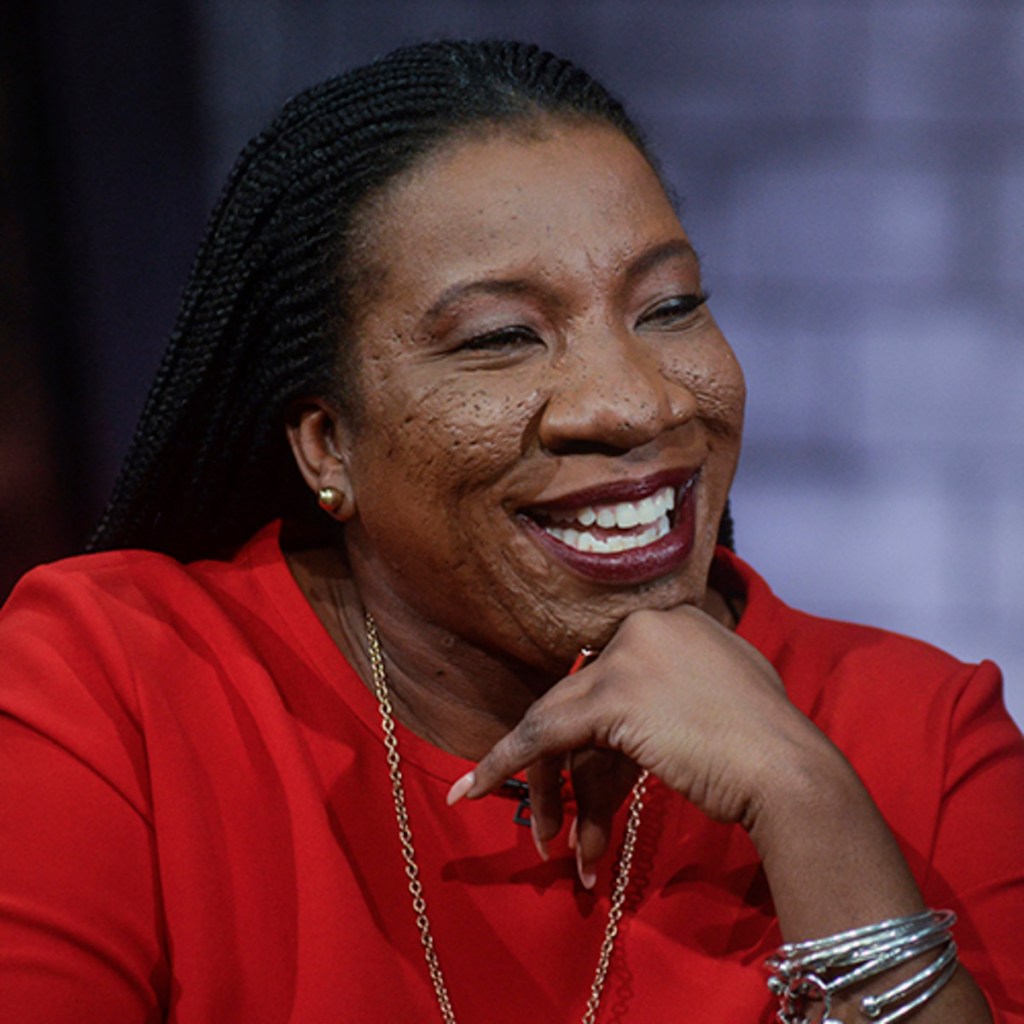
Tarana Burke
Did you know that the #MeToo movement was created by a Black woman?
Tarana Burke create Just Be Inc. in 2007, in response to a thirteen-year-old girl who had confided her experience with sexual abuse to Burke [2]. Burke committed herself to being present and supportive of individuals who had been sexually abused [3]. She titled her movement “Me Too” [4].
In 2017, Me Too became a hashtag spurred by white actress Alyssa Milano when accusations of sexual assault and harassment were made towards Harvey Weinstein [5]. Burke stated that when she first saw Milano’s tweet: “I felt a sense of dread, because something that was part of my life’s work was going to be co-opted and taken from me and used for a purpose that I hadn’t originally intended” [6]. Milano has since publicly credited Burke for building the foundation of the #MeToo movement, and Burke received this in good grace [7]. Burke commented that in spite of a great lack of intersectionality across different movements, the focus must be the amplification of the voices of the survivors. “I think it is selfish for me to try to frame Me Too as something that I own […] It is bigger than me and bigger than Alyssa Milano. Neither one of us should be centered in this work” [8].
Burke’s work, and her interactions with Milano, draws to a deeper understanding that as allies, we have the responsibility to both credit Black women for their work, while continuing it. There is space for everyone to put in the work while not co-opting the initial creation, and main goals, of the movement.
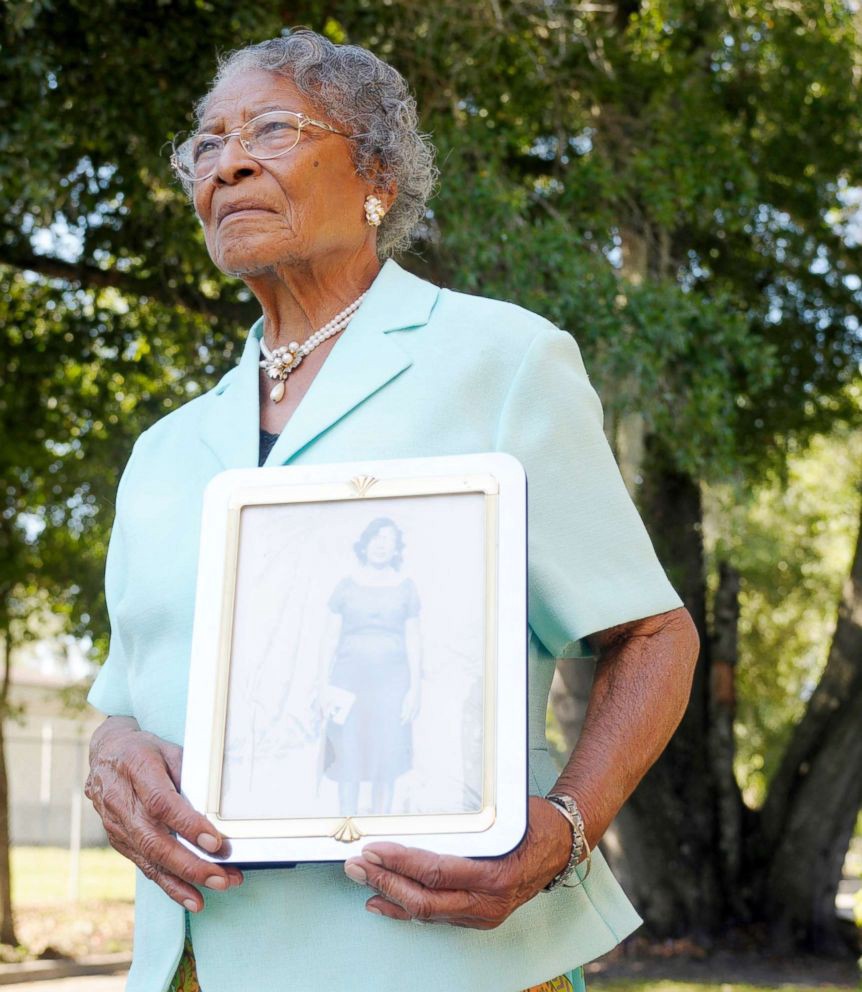
Did you know that before, during, and after the 1955 Montgomery Bus Boycotts, Rosa Parks was an anti-rape activist? Did you know that the men who raped Recy Taylor threatened to kill her if she spoke on her sexual assault… and she did so anyway?
The narrative that Parks was simply tired, and did not have the energy to walk to the back of the bus is wrong. The only thing Parks was tired of was giving in to the systemic racism present in America. Not well known to the world outside of 1955 Montgomery, Alabama, Montgomery’s bus operators were infamous for bullying, brutalizing, assaulting, and murdering Black people who refused to operate under the racist order of Jim Crowe [9]. Rosa Parks stated, in 1956, that the women who walked to work for 381 days did not do so because of her, but because she “was not the only person who had been mistreated and humiliated,” and because “other women had gone through similarly shameful experiences, worse than mine” [10].
One of the women Parks was talking about was Recy Taylor. On September 3, 1944, twenty-four-year-old Taylor had been walking home after church, and was forced into a car by seven white men. They blindfolded her, gang-raped her, and threatened to kill her if she reported them [11]. She did anyways. The case found its way to Parks, who launched the Committee for Equal Justice for the Rights of Mrs. Recy Taylor.
Two all-white, all-male grand juries refused to bring charges against the seven white men who raped Taylor [12].The world moved on and Taylor’s case was soon forgotten for other injustices committed against black women. However, her courage and bravery will never be forgotten.
Taylor and Parks reflect present injustices within the judicial and criminal justice systems in the United States. Despite race, women and girls are often subject to great humiliation and trauma when demanding justice for sexual harassment, sexual assault, and rape. Race compounds these issues.
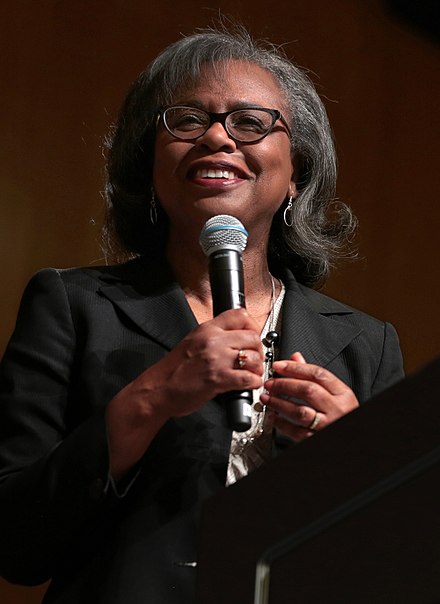
Did you know that Joe Biden, the 46th president of the United States, slandered and humiliated Anita Hill when she spoke of her harassment by Clarence Thomas?
On October 11, 1991, Professor Hill stood before the Senate Judiciary Committee to detail the harassment perpetrated by Thomas while he was her supervisor of two years at the Department of Education and the Equal Employment Opportunity Commission [13]. Her public bravery was met with questions like: “are you a scorned woman?” and “do you have a martyr complex?” [14]
When Hill spoke out about how she was treated by Thomas, her identity as a Black woman speaking against a Black man running for a seat on the Supreme Court, became a point of discomfort for her. As activist Elliot stated: “having to constantly weigh the effects of racism against your own safety or your community’s safety puts abused BIPOC people in an impossible situation” [15]. Hill risked perpetuating social stereotypes on the character of all Black men when she spoke out against Thomas because society views non-white individuals as character references for entire cultures. When white people commit sexual assault and harassment, it is a crime. When non-white people do so, it is a crime committed by a non-white person. This crime is then used to explain the perceived violence of non-white communities, and contributes to the use of racist stereotypes and behaviors.
Hill represents daily struggles when gender and race intersect. To be a visible minority is to be a figurehead for that culture’s reputation. To be a woman is to be a visible representation of gendered stereotypes. When both identities intersect, it is often a struggle between individuality and justice, and race and dismantling stereotypes.
Did you know that Major Griffin-Gracy has been a trans rights activist for over forty years, including during the 1969 Stonewall Riots?
Griffin-Gracy is a survivor of Attica State Prison, and a former sex worker, and a leader in human rights activism. She is known as “Mama” to many of “her girls:” non-white, trans women who have encountered, survived, and are healing from police brutality, and incarceration in men’s prisons. In 2005, Griffin-Gracy joined Trans Gender Variant and Intersex Justice Project and eventually became executive director [16]. She is currently creating and building her own organization: House of GG’s, a safe space and family for the transgender community [17]. Griffin-Gracy wants to create an environment in order to help young girls on the street by teaching them how to negotiate with police, and which steps to take if arrested.
Griffin-Gracy has been an activist for over forty years, and in order to keep a consistent fight, she stated: “We have a right to be angry, but you have to be angry in degrees. You use your anger to come up with ways to dismantle the bullshit that is oppressing you in the first place. There has to be a way to manage this so you accomplish the goals you set out for yourself. It’s not an easy thing, but you must nurture, take care of, and look out for yourself too. If you don’t take the time to heal your wounds and soothe your ills, you cannot be of any benefit to anybody else.”
And she has a message to white individuals and all allies: “Miss Major is not your token.”
“They’re still killing us, they’re still throwing us underneath the jails, but there are people that are not a part of our community who are bitching about the injustices that they are doing to us. That’s a major step.” -Miss Major
If we learn anything from the four women highlighted above, it is that Black women have been largely alone in their fight for equality, bodily autonomy, and social justice for far too long. I chose to highlight just four out of an inexhaustible list of Black women who have fought for and paved paths that have ultimately benefited us. We need to keep exploring this list, adding to it, and sharing it so that Black women no longer have to worry about their work being co-opted by white people with good intentions yet inherent biases. So that Black women, no longer have to worry about being defined only by one aspect of their lives, choosing between speaking out and holding their harassers accountable and supporting their community against racist attitudes. So that, they no longer have to be alone in their fight for better lives.
I am ashamed to say that I had only heard about Rosa Parks as the woman who started the 1955 Montgomery Bus Boycotts and not as the woman who created committees for black women seeking justice against their rapists. I am ashamed to say that I did not even know about Tarana Burke although I am a strong supporter of the #MeToo movement, and I thought that supporting current transgender rights was the same as understanding and supporting the activists who made trans gender rights advocacy a trend on social media. We need to understand that our privilege creates blinders that allow us to protest, spread awareness, participate in Instagram petitions, and start conversations because Black women started these movements. They did it under threats of personal harm, death, or professional and social degradation. They did it because Black women matter.
We have the responsibility to demand justice for Black women during the #MeToo movement as they have for us. We have the responsibility to protect Black women as they have us. We have the responsibility to say their names: Monika Diamond, Tony McDade, Nina Pop, Dominique “Rem’mie”, Riah Milton, and countless other transgender individuals who have been killed for being transgender individuals. We have the responsibility to care, and to act on that care.
Interviews Conducted by: Sydney Ko, Shayla Joshi, and Niroshini Mather
Meet LMF’s Leaders
Sonya Barlow
Sonya is the founder of LMF Network, and is also a TEDxSpeaker, Podcast Host, Independent Diversity Consultant and soon-to-be published author. In 2020, she was named the winner of the Most Influential Women in Tech UK.
Beenish Saeed
Beenish is the founder of LMF Toronto chapter. She is an award-winning speaker, lawyer and technology evangelist. As the founder of LMF in Toronto, Saeed works with leading global organizations to up-skill marginalized communities in technology, business, diversity and personal branding.
Shanzeh Chaudhry
Shanzeh is a 4th year chemistry major here at Queen’s who is also completing her certificate in business. In search for a positive community of people to connect with, Shanzeh found LMF. From this point onward, Shanzeh worked to create a branch of LMF at Queen’s, hoping that other women on campus would also find comfort in this community.
Introducing… Like Minded Females
What is LMF?
Sonya: Fundamentally, LMF is a diverse community that supports showing up as your best self. We do this through helping our network build confidence and achieve career goals through our various programs, including the social mobility, mentoring and diversity inclusion programs.
Beenish: We are a nonprofit organization and we up-skill individuals from marginalized communities in technology, business, personal branding and inclusion.
Shanzeh: LMF is a community wherein women can discuss social issues pertaining to the workplace and academic experiences in a safe space. This community cultivates a comfortable place for students to ask any and all questions related to career upskilling and networking.
What are LMF’s goals?
Sonya: We have 3 main goals: to educate, enable and empower. Fundamentally, our main goal is to be a stopover between not knowing and finding your greatest passion.
Shanzeh: LMF Queens’ goal is to provide resources for females to empower themselves professionally.
How does LMF achieve these goals?
Sonya: The average person spends about 3 hours on social media per day, so I think it is really important that we follow healthy accounts which make us feel good about ourselves. I have a very toxic relationship with Instagram, and I haven’t been able to hack it. I want LMF content to provide our followers with ongoing positivity and resources, in contrast to other social media accounts which only make you feel good temporarily. Currently, at the UK branch, we conduct about 3 workshops a month; our interns compile social-mobility and diversity research reports; we provide job support for ambitious talent to meet diverse companies; and our team and contributors upload positive content and empowering blog posts. Apart from that, we work with companies through consultancy and actual diversity training, because it is not enough to bridge the gap for professionals, it is also important that companies actually change their policies.
Shanzeh: This goal is achieved through various campaigns, such as our mentorship program, as well as by providing women on campus with many resources to cultivate a network and become their best professional selves. We also create a community through our social media platforms. Additionally, events are currently in the works for the Queen’s campus.
How is LMF different from other collectives?
Sonya: The organization is a real community founded by real people and it values inclusivity, authenticity and accessibility. We invite people onto our team and advisory board who can actually reflect and represent people within our community. The biggest difference is that we have never spent a single penny on additional advertising, including sponsored posts. Everything we have done to-date is 100% word of mouth. In January of 2020, our Instagram got hacked and we had to start again from scratch. That’s another reason why we are different; we have genuinely messed up enough to know what we need to do right. It is something we are very proud of as a collective. Our following is organic, and our people are real.
Beenish: What sets us apart from other collectives is that we’re not just a pretty face. We have qualified individuals who lead our workshops with a strong growth mindset culture at LMF to help us continuously learn, improve, and excel. When we take upon the job of training somebody in whatever initiative they’re involved in, either related to business, technology, up-skill or even inclusion, we always do it with a tailored approach.
Shanzeh: LMF Queen’s is different from other clubs on campus because we provide direct access to knowledge and resources that are useful both in the long run and currently. LMF Queen’s has access to many initiatives forwarded by LMF Toronto and LMF UK. Not only does LMF Queen’s provide this avenue, but we provide a diversity inclusion factor in that we welcome everyone in our community.
LMF UK- the Foundation
Responses by Sonya Barlow.
What inspired you to start LMF?
I graduated in 2015 and I started working in the tech industry. By 2018, I had no social media, and my really good friends were all located internationally. I felt really lonely and isolated, and I felt imposter syndrome. My manager was not the best, and I was faced with a lot of work competition. I didn’t know who to direct that energy to or who to create conversation with. As a recent graduate, and a South Asian girl who helps with her family, I found that a lot of opportunities were super expensive in the area of London where I was living, so I found it really difficult to find the extra income just to meet people. I went to a networking club and it cost 2000 pounds to join, which didn’t even include the event tickets. Why would I pay more than 2 grand to meet people when there are 7 billion people in the world? That was the ‘spark’; I was lonely, I didn’t have an identity, I felt like an imposter at work, I didn’t know who to talk to and I just got tired of not knowing what to do and being pushed around. I think a lot of us experience this but not many do something about it. However, I was at such a low point that even if I did something and it didn’t work out, I would do it again. Ironically, the first 3 events no one showed up to and it was just me by myself.
Did you come across any obstacles as a woman, particularly a woman of colour, when creating LMF?
LMF was never meant to be a business. It was nothing more than a brunch club. Its purest form was, “I just need to go to brunch with the girls and talk about work”. What’s happened now is pure organic evolution. To answer your question, yes; when I talked to my family and friends about starting this network, they said “you’re stupid, you’re crazy, you’re silly”. There was a lot of laughter and questioning of who would talk to girls about career, confidence and work.
1) No one had faith in my vision, and equally, I didn’t know what my vision was. It was just a brunch club, that was the only intent.
2) As a South Asian woman, you already have a lot more obstacles to face. You need to prove why people should come, you have to change their perception and you have to remind them why you are the best person to lead a network.
3) I didn’t have social media, so I didn’t have a personal brand. Why would someone pick me? Why would someone come to something that I had done when they didn’t know who I was? I walked into it really naive.
This business evolution just happened, and no one is more surprised than I am. It was a seed that kept growing.
LMF Toronto- the First Branch
Responses by Beenish Saeed.
How did you come about this position?
I founded LMF in Toronto in October of 2019. We officially launched it last year in January 2020, and it’s been going fantastically so far.
The reason why I started our LMF chapter was because A: I really loved the concept, and B: I really loved having an opportunity to start something. Sometimes you see lots of initiatives, and find yourself thinking, ‘Where do I start? How do I start? Whom should I contact?’ That freedom and that independence is excellent! So when I learned of LMF, I could really envision something good coming out of this initiative in my community.
Where does Toronto need the most work?
One thing that really needs to change is the perception that workplaces in Toronto are perfect as they currently are. I think these notions arise since most people think that Canadian politics are not as controversial as they are in the US, and yet, controversial things are actually happening to us all the time in the workplace. Specifically, throughout Canada, we have ethics scandals and racial discrimination going on, both in politics and in general workplace environments.
The strict rule that Canada seems to have is that you need Canadian work experience. Hence, people with this experience are sometimes preferred over extremely qualified people with equal, but foreign, work experience. Yet unfortunately, Canada is still painted as almost perfect among the international community.
LMF Queen’s
Response by Shanzeh Chaudhry.
Why was LMF Queen’s founded?
LMF Queen’s was founded as a response to Shanzeh’s experience as a female in STEM. This field is competitive and at times there is a lot of negativity, which can be draining. As a result, Shanzeh wanted to provide a safe space to empower women in the workplace at Queen’s, which she has done through LMF. Now, students at Queen’s not only have access to many resources, but also to a community of like-minded individuals who are willing to help one another.
Personal Stories
Shanzeh
I myself struggled with my self-confidence when sending emails or simply reaching out to people for help. I know how challenging it can be to put yourself out there and doubt every step you take to network and reach out. My first and second year of university brought my self-esteem down tremendously and I realized I had to rebuild my trust in myself to advance my future career and reach my goals. I hope LMF can provide a sense of comfort and instill confidence in students facing the same struggles I faced in my initial years of university.
Beenish
In addition to being a woman in the workplace, I’m also Muslim, Pakistani, and a first generation immigrant. These identities have definitely impacted my work life. At my previous job, I was not invited to parties, including one with my own manager, just because I did not drink alcohol. Experiencing this discrimination definitely impacted my mental health. I started thinking that my opportunities were limited because I was not on good terms with my manager. I want others to realize that people can have various reasons for not wanting to partake in something, and to single them out on the basis of that is not cool.
I was also sexually harassed at work. It’s a very strange and uncomfortable situation to be in and you don’t know how to act, you don’t know what to do, especially as a young woman in the workplace, you just don’t know who you should approach or if you should even share it with HR. These are just some of the experiences that come to mind when I think about what inspired me to raise my voice and try to help people in similar situations.
Sonya
I didn’t fit in culturally. I wasn’t white enough to be white or brown enough to be brown. Second, I devalued myself because I didn’t know my self-worth. Unfortunately, when you go from university to work, no one tells you about professional skills, office banter, or office politics. I walked into my job with a lot of ambition and confidence, but one day my manager took me aside and said “That’s cool, but your passion isn’t for here. Leave your moods at home”. I thought that was strange, but that’s just what I did.
A third scenario was that I worked in a senior role for 4 months and I eventually asked for a pay raise. I was meant to get a 10% raise, but they only gave me a 2% raise. I decided to make a business case for more income and my manager told me, paraphrasing, “If you ask for more money, I am going to hinder your career progression”.
Advice for WOC in the Workplace
Shanzeh
Growth is uncomfortable because you’ve never been here before. When trying new things or reaching out to new people, it can feel uncomfortable and sometimes painful because it’s new. Discomfort indicates that you’re moving towards growth and in the right direction. It’s important to keep going in these instances as it leads to the most effective realizations and changes. In my last year of university, I’ve felt uncomfortable due to the number of new people I had to present my ideas to and the types of skilled professionals I have had to integrate myself with. Despite the learning curves and nerve-racking moments, I learned to develop a stronger sense of self-confidence. My network and community of female leaders allowed me to push myself. In times of discomfort, surround yourself with ambitious females.
Beenish
I’d say, choose to discern. Choose to determine how much you want to invest in addressing microaggressions, and don’t feel pressured or responsible to respond to every single incident. You will feel more empowered and more in control when you decide that you should be the driver of your own life. And always be prepared. Even if you want to address something, don’t just shoot or blast an email straight away aggressively or angrily; absolutely feel these emotions, but also calculate everything and take control.
Sonya
Don’t be afraid to try. Many people have a fear of failure, but I am a big advocate for failing. As I mentioned in my TED talk, I am where I am today because I failed so much. Don’t be afraid to try new things as those are what you will learn from.
Secondly, don’t listen to people when they call out your weaknesses. Instead, focus on your strengths, on elevating your skills and on identifying your purpose. If you are going to work for the next 10 years of your life, what do you want to achieve? What do you want to do? What are your values and how are you aligning them? In my first few jobs, I chased money. I am now privileged enough to know that money is not my driver, and I am happier now. When I applied for graduate work, I got to the final round of four massive jobs and each declined offering me a position. I failed my first years’ probation, and I wasn’t able to sustain work. In hindsight, maybe some of it was my fault, but I also realized that I hadn’t aligned my roles with my values, my strengths and my skill set. You need to fit your version of you, not that of someone else.
In the Works for LMF
Sonya: I am writing a book called “Unprepared to Entrepreneur”, about my own business story, which is coming out in October and is currently available to pre-order!
Beenish: If you want to be a part of volunteer initiatives, or if you want experience in social impact through work, certificates or credits, you should definitely get in touch with me. If you would also like to work toward starting your own projects, or want to advertise your own initiative, you can contact me and I can get things going for you on our LMF platform.
Shanzeh: LMF Queen’s just hosted a panel about goal setting. Currently, they are hiring for the 2021-2022 school year. Check out the info here: https://linktr.ee/lmfqueens
How to get Involved with LMF
There are so many ways to get involved with LMF, from events at Queen’s to being a part of their larger mentorship program.
You can contact LMF Queen’s at the following addresses:
In an ideal world, people can be with whoever they want.
In an ideal world, we could stare at each other lovingly, sipping on our coffee while gazing into each other’s eyes; because you’re admiring everything that I portray, and I’m deeply fascinated with all things you have to say.
But sadly, this isn’t the case.
This isn’t the case because as women of colour, we live in a world where history continues to haunt us. We live in a society where our skin colour determines our status and how desirable we are to others. We live in a highly critical community where we are perpetually walking on a fine line between trying to fit in and holding on to your true identity.
For many of us women of colour, dating is uncharted water. We find ourselves constantly on a cautious look-out for simply being able to fulfill someone’s fantasy rather than being admired for who we are.
But before we get too far ahead- hear me out. This isn’t another race-based condemnation. It’s a piece coming from a hopeless romantic still in search of that perfect rom-com moment.
When Matt James, the first Black Bachelor from the Bachelor ended his relationship with
Rachael Kirkconnell, due to her history of racist actions, James stirred a discourse.
James did not completely dismiss the possibility of the two getting back together; instead, he informed the audience that Kirkconnell simply has to work on herself first before the two could progress as romantic partners.
While we may all be on the same page of seeing racism as this behemoth that needs to be defeated, we tend to overlook our own racial biases. This is why empathy is such an important factor when navigating through the dating scene.
It is especially important in an interracial relationship to be empathetic. Being able to empathize with your partner and understand the struggle they go through as a visible minority is crucial in making a relationship work. After all, part of being in a healthy relationship is to be a support for your romantic partner – someone who cheers for you on the sideline.
Obviously, this isn’t to denounce the struggles others may be facing; but it is crucial for someone who’s not a part of the BIPOC community to understand the rocky route we continue to confront. From ensuring that someone doesn’t just fancy us for our “exoticism” to wondering if we’re an experiment for people to gain “experience,” to phrases such as “you’re really pretty for an Asian,” to “I’ve always wanted to travel to Asia,” renders us to endless cynicism. In fact, it is degrading, because it often leaves us wondering if we’re just your gateway to experiencing more culture? Or do you truly see us as your equal?
With empathy, members of the BIPOC community are valued as individuals. We’re valued for our thoughts and ideas, features that are more than skin deep like our quirks and mispronunciations.
It reaffirms we’re not just another subject to dispose of once your “study” is done. So, let’s start dating with more empathy, and maybe for once, Hollywood’s most cliched rom-com moments will be a part of our dating experience too.
Feel free to submit to our blog through the portal below!
In my first year here at Queen’s I met a guy named Tyler. When Tyler and I first met we were exclusively class friends; you know, those friends you only talk to in lecture and don’t really go out of your way to hang out with outside of school.
Second year came around, and Tyler and I had another class together. We got pretty close that year. Soon, my housemates got to know him through the many stories I would tell about him.
For context, Tyler would never really classify himself as ‘one of the boys.’ He has always been the type of guy who can make friends with just about everyone and seemingly respects everybody. He prided himself on the fact that he wasn’t a stereotypical Queen’s boy who objectifies women and fucks for sport.
Tyler had always held himself in the highest regard. As a white-passing biracial male, he was aware of the privilege he had and always claimed to be an ally; however, I soon learned that his actions did not always match his words.
The first red flag I saw with Tyler was the way he used dating apps. Being in university, dating apps like Tinder and Bumble are quite common. The issue with Tyler and Tinder wasn’t the fact that he was on it, it was the way that he used it. Tyler would swipe right on every single girl and wait for them to message him first. When asked why he did this, he said, “Because then I don’t have to put in any effort. Not like any of them are going to be anything more than a quick fuck.”
I guess Tyler figured it was okay to say this to me since we were friends. In hindsight, I should have reamed him out for saying it, but all I replied was, “That’s not cool, dude.”
This incident should have been a warning sign for me, considering it was not only disrespectful but misogynistic. But, for some reason I stuck around even though he proved early on that he was exactly what he referred to: a stereotypical Queen’s boy.
After this incident, nothing out of the ordinary occurred until I introduced Tyler to my housemates. The first thing he did after meeting them was rank them in order from hottest to least hot, all the while rationalizing this hierarchy. I remember telling him to stop because these were my best friends. He just laughed it off and said I was overreacting.
In this ‘hotness hierarchy,’ Tyler put me at the top. At this point, I had already made it clear that I saw him as nothing more than a friend. In retrospect, there were so many times where he was flirting with me even though he knew I didn’t feel the same way. I would always turn down his advances and made my feelings clear by calling him “bro,” or “homie.”
Not only did he say that I, a woman of colour, was at the top, he also ‘awarded’ the second hottest of my housemates to the one other woman of colour. It was obvious that that colour of our skin was a contributing factor to our ranking on his list. This was when I first noticed his infatuation with women of colour.
This racial fetishization was further evidenced through an incident when I was helping out with a club on campus. I was helping this club raise funds so I was sitting at a donation table in the ARC. Tyler stopped by and gave us a $20 bill. When he handed us the money, all he said was, “you know how much I love women of colour.”
Shortly after the ranking fiasco, he came to the club with me and my housemates. That night, Tyler and my housemate (who is not a woman of colour) started hooking up. After they initially hooked up, Tyler kept talking about how she was one of the only white women that he was attracted to and how he is usually only interested in women of colour. Somehow, he would always find a way to work his “allyship” and adoration of women of colour into the conversation.
See, here’s the thing. There is a fine line between appreciation and fetishization, and Tyler loved to walk that line. I’m someone who tries to see the good in people, so I gave Tyler the benefit of the doubt for way too long.
The incident that finally ended our relationship occurred one evening when Tyler and I went out with a friend and some other acquaintances. At one point, the conversation turned to dating, and Tyler looked me in the eyes and said, “You just want a man to colonize you.”
My jaw dropped. I was livid. I turned to him and demanded to know what the fuck he was talking about. He defended himself, explaining that he was right because I apparently only like white men, before continuing to attack me for the next five minutes.
I was so confused. Confused and hurt because:
This was coming from someone I considered a friend.
What does that even mean?
When had I ever said, or demonstrated, that I exclusively like white men?
Not only did Tyler have the audacity to say these horrible and completely untrue things to me, he said them in public in front of people I barely knew. These white women not only let Tyler say these disgusting comments but remained silent when he kept verbally abusing me. They acted as bystanders, pretending that it wasn’t their problem.
If that had happened to one of my friends in front of me, I would have immediately jumped in to defend them and end the conversation. Honestly, I probably would have stepped in even if they weren’t my friend. No one should have to endure that.
Afterwards, I went home and cried with my housemate.
Why would he say that? What does that even mean? Is that what he really thinks of me? What did I do wrong?
Although my housemate is emotionally stunted, she was surprisingly successful at comforting me. We discussed everything that happened, and I came to the conclusion that I no longer wanted Tyler’s friendship. I didn’t owe him anything. So it was over.
But really, it wasn’t. What Tyler said to me that night still runs on a loop in the back of my mind.
You just want a man to colonize you.
When I find a guy cute at the grocery store- you just want a man to colonize you.
While I’m swiping on Bumble- you just want a man to colonize you.
When I’m on a date- you just want a man to colonize you.
What Tyler said will always stick with me, but I’ve since realized that what he said reflected no fault of mine. Everything Tyler had said about me and other women of colour since I met him speaks volumes about his character– not mine.
Yes, I was complacent for a while. I let him get away with too much. But no more. I will never let another man speak to me, or to any other woman of colour, like that again.
Tyler is a prime example of someone who fetishizes women of colour. He would choose a woman of colour over a white woman in a heartbeat without even considering their personalities. The worst part is, I guarantee you that to this day, he would claim this fetishization as allyship.
Fetishization contributes to both misogyny and racism- two things that will never be okay. Tyler’s behaviour will never be okay.
And to all the Tyler’s out there- if I ever see you fetishizng women of colour, it’s on sight. 👊🏻👊🏼👊🏽👊🏾👊🏿
** Names in this article have been changed (Tyler)**
Feel free to submit to our blog through the portal below!
Written by: Niroshini Mather, Sydney Ko, Shayla Joshi
March 8th 2021, not only marks International Women’s Day but our first ever blog anniversary. QWOCC’s blog has been up and running officially for one whole year. To celebrate this milestone, our blog team collaborated to create this year in review- a timeline from when we launched our blog to where we are now.
Before we get into the year in review, our founding presidents Yasmeen Choudhri and Danielle Pinder, recount how this club was initially conceived.
On a particularly cold evening in November of 2019, we sat in BioSci chipping away at an assignment. Gradually our conversation deviated from DNA repair mechanisms and we began chatting about our time at Queen’s. Although we didn’t know each other too well, we clicked over our shared experiences as WOC in a predominantly white university. We both come from different ethnic origins and religions, but we noticed a lot of similarities in our anecdotes. We ranted about fetishization and dating horror stories, underrepresentation in media, and the confusion surrounding our identities as individuals of mixed race. Through this conversation, we noted that there was no club on campus for WOC and allies, that was not affiliated with a particular religious or ethnic group. Thus, QWOCC was created with the intention to create a safe space on campus for self-identifying women of colour and allies to share their thoughts, experiences, and feelings.
Over the past year, we are so proud that we’ve been able to connect with so many WOC within the Queen’s community, and grow our executive team. From the blog to our speaker series events, to our General Members committee meetings, our team has accomplished so much in merely a year. Having the opportunity to reflect on our own experiences as WOC, and to learn from the other WOC within the Queen’s community, has been a wonderful experience thus far. We have so many more exciting things planned for the year to come and can’t wait to continue working with our team toward making them happen.
MONTHLY BREAKDOWN: A Year in Review
March 2020
Our first ever event was on March 3, 2020. We hosted a sticker sale in the ARC to spread the word about our club on campus. Though we did launch our social media at the end of February, this month marked not only our first event but our official blog launch! The founding 6 team members worked relentlessly behind the scenes to make this launch possible.The first article on the blog was an introductory post giving a little insight as to who our exec members were. (https://qwocc.design.blog/2020/03/07/welcome-to-my-blog/) The second article was a quick rundown of “What is a Woman of Colour?” (https://qwocc.design.blog/2020/03/07/example-post/). From here on out, QWOCC officially had its own web domain- when you google “QWOCC” we are the first hit!
April – May 2020
Our 2020-2021 executive team was selected. With 15 members, our executive team was ready to hit the ground running for the upcoming school year. These months were used to plan upcoming events and content.
June 2020 – August 2020
Over the summer, QWOCC dedicated the months in advocating for change. Given the social situation and mass attention garnered towards the Black lives Matter movement over the summer, QWOCC raised awareness by publishing multiple articles from our blog coordinator (Shayla Joshi) and blog editors (Niroshini Mather and Sydney Ko). Joshi’s article on “How to spark change: the distinction between equity and equality” (https://qwocc.design.blog/2020/08/08/how-to-spark-change-the-distinction-between-equity-and-equality/) and Mather’s article on “Stolen by Smith,” (https://qwocc.design.blog/2020/08/22/stolen-by-smith-an-article/) an Instagram account that posts anonymous confessions of those who experienced discrimination while studying at Queen’s, emphasized the importance of advocacy and amplifying marginalized voices on campus. Aside from raising awareness of current issues and personal struggle, QWOCC contributed to furthering social change within the Queen’s community. From making donations to Queen’s Black Academic Society to creating a resource list dedicated to those who would like to learn more (https://qwocc.design.blog/2020/06/05/resources-ways-you-can-help/), QWOCC remained active throughout the summer.
With exam season fastly approaching, we all needed to be inspired; hence the month of November was dedicated to acknowledge WOC in academia and their many achievements. In Niroshini’s article, “Missing: Women of Color Educators,” she details the underrepresentation of WOC in academia and the growing importance to ensure a diverse teaching staff representative of the student body’s diversity (https://qwocc.design.blog/2020/12/01/missing-women-of-colour-educators/).
January 2021: What does Being a WOC Mean to You?
The new year is often gleaming with a fresh start- bringing with it moments of reflection. Considering the past year, there was much to reflect on. In addition to the pandemic that fundamentally altered life, 2020 was a time of social change. We witnessed the magnification of the Black Lives Matter movement, which empowered the BIPOC community internationally. In response to this, we finally saw institutions responding to calls for accountability and change. Thus, we thought the best way to reset the blog was by answering the poignant question, “What does Being a Woman of Colour Mean to you?”. The two emotional, and reflective pieces share the author’s quest for identity, pivotal personal experiences and their own definitions for the term “WOC” (https://qwocc.design.blog/january-2021/).
February 2021: WOC in the Workplace
February is often a stressful month for undergrads, spent searching for internships, research opportunities or potentially even preparing for the first post-graduate job interview. Thus, we thought it fitting for this month’s theme to be “WOC in the Workplace”. During the month of February, we held a collaborative speaker series, with Queen’s Scientista, called “Discovering Your Professional Persona”. This panel featured Dr. Heidi Ploeg, Trinda Penniston and Dr. Qingling Duan who shared their stories of obstacles and triumphs that led to their establishment as leading professionals within their respective fields. This month our blog post took a deep dive into the trouble with aspiration as a WOC and recognized groundbreaking WOC leaders in male-centric fields (https://qwocc.design.blog/2021/02/24/from-then-to-now-opinion-piece-woc-in-the-workplace/).
March 2021: Navigating Relationships as a WOC
And that brings us full circle! One whole year! Thank you for being a part of our journey thus far and we hope you stay along to see everything else we have in store. We are truly grateful to each and every one of our general members, readers, contributors, and executive team- without all of you none of this would be possible. It is thanks to all of you that we have been able to cultivate this community both virtually and on campus.
Stay tuned for some upcoming articles this month discussing WOC and relationships!
Growing up I was always pragmatic about my dream career. One year I wanted to be a teacher like my aunt and the next, an accountant like my mother.
The constant theme was choosing a career I knew to be achievable; a career I had seen others like me work and succeed in.
I never dared to dream about becoming an astronaut, an actress or even the Prime Minister of Canada like most other kids. From the beginning,I was conditioned to believe that brown-skinned girls like me did not belong in a debate or on the Oscar stage.
Looking back now, it’s evident that I was conditioned to believe that my aspirations had limits; limits resulting from the societal implications of my race and gender.
In recent years, there has been optimistic change; the rise of many women of color in white male dominated fields has been inspiring and a sign of hope. Even as a Canadian, elected vice-president Kamala Harris, an indo-african American woman, expressed the tangibility of the impossible. Her election called for the world to recognize their mistaken biases, and for women of color to no longer allow their race, or gender, to create doubt in their potential and resilience. Of course, she is not alone in her achievement. Over the past few decades, we have seen the rise of a new set of pioneers setting new standards and workplace norms.
Waad Al-Kateab: a Syrian journalist who created a groundbreaking documentary regarding the Syrian Civil war, becoming the first Syrian to win an Emmy.
Nemonte Nenquimo: an Indigenous leader from the Ecuadorean Amazon who took it upon herself to protect the rainforest when the government continually failed to do so.
Sania Nishtar: a Pakistani physician, internationally recognized for her work around health development in Pakistan.
Maitreyi Ramnikrishnan: one of the first Tamil-Canadian actors to star in the leading role of a television series.
The rise of women of colour is visible in almost every field, from sports broadcasting to mechanical engineering, actuaries to business ownership. It has given me an utmost hope for the next generation of young women of colour; hope that they will be unafraid to dream, and achieve, boldly and unapologetically.
Feel free to submit to our blog through the portal below!
This is not only a loaded question, but one I cannot give a concrete answer to. The significance of being a woman of colour has changed so drastically over the course of my life and will continue to change as I gain new experiences, meet new people and grow as an individual. As of right now, I see the term as holding a complex duality; a good and a bad.
I was one of the few people of colour (POC) in my classes growing up. However,I always saw my identity as a “woman of color” as a source of pride, a hidden superpower.
While this may have stemmed from my appreciation for the overt “uniqueness” it brought with it, I never shied away from vocalizing my love for my culture with my peers and embracing the numerous customs, art forms and languages. As I saw it, being Tamil was as much a part of my identity as being Canadian.
However, somewhere along the way, it all changed. Maybe I became a little less naive about the world or maybe the world around me became a little more intolerant. I don’t know what catalyzed this overt change, but it was most probably a culmination of events; experiences of overt racism, a disconnection from my peers or maybe just a sense of exhaustion from the continual subjection to daily microaggressions.
All I know is one day I was unabashedly proud of my heritage and the next, I felt ashamed when my mom spoke to me in Tamil in front of my friends. I began to feel consciously aware of my race during seemingly minute moments such as discussions about makeup with my friends or during a job interview. I had a growing realization that, in order to be taken seriously, I needed to put in additional effort and dedication than what was expected.
And even then, my successes were often met with a condescending sense of “surprise”. And then, just as quickly as the appearance of their feigned disbelief, my successes were overlooked once again.
Somewhere along the way I began to see my status as a woman of color as an impediment, an additional burden that only exacerbated the difficulties of teenage life.
What did I do? I guess you could say I took the “assimilation approach”. I tried to fit in. It started with minute changes like going on private mode on Spotify when listening to Tamil music to purposely mispronouncing my name during introductions so it would be “easier” to say. Looking back, I now recognize that in trying to fit in I not only lost my attachment with my culture, but part of my own identity as well.
So where does that lead me to today? In a full-circle fashion, I chose a university that, while esteemed in other regards, has a troubled reputation regarding its small POC population.While I was scared that this would push me further away from my cultural identity, the reality was the exact opposite.
Over the past two years at Queens, I have been able to regain the pieces of my cultural identity that I had lost and regain a sense of pride in being a Tamil-Canadian. I made the recognition that no matter how hard I tried to assimilate, I would always be “different” to some people. Thus, I regained a strengthened resolve to embrace those differences and learn to appreciate them rather than have them vilified.
I became more involved in the Tamil community by attending events and joining clubs like QWOCC that encouraged the sharing of cultural backgrounds. I recognized that while there are many additional struggles associated with being a woman of color, the benefits it provided, such as a secondary community, were incalculable.
Of course, this realization is not perfect. My appreciation comes in waves, as does my discouragements. However, seeing the rise and leadership of powerful women of color, such as the election of an indo-african American woman as the US vice president, Kamala Harris, has been inspiring and encouraging.
So, what does a woman of color mean to me today?
Embracing your cultural identity as a source of pride and finding a meaningful balance between both communities.



 QWOCC
QWOCC 