Colourism in the South Asian Community

Written By: Niroshini Mather

Now more than ever, the daily struggles faced by the Black community are being brought forward in light of the recent murders of George Floyd and Breonna Taylor at the hands of the police. As a result, many of us have begun a much needed introspection to determine how, inadavertently or not, we have enforced the systemic discrimination of this vibrant community.  

Due to our stance as people of colour, the South Asian community has often disregarded their involvement in the discrimination against Black Canadians. How can you be part of the problem when you face some facet of the problem yourself? However, this perspective is severely flawed when recognizing the abundance of anti-black stereotypes and stigmas that have become entrenched in our community’s behaviors and thus make us just as complicit in the discrimination of the Black community. The dominance of colourism in governing South Asian beauty standards is just one example of such anti-black beliefs that continues to persist amongst our community members.

Colourism, a term originally coined by the American Novelist Alice Walker, is a form of prejudice stemming from flawed social implications attached to skin colour within the same race (“Discrimination Based on Colour”, 2020). In the South Asian community, light skin is seen as desirable, an image of beauty, while darker skin is viewed to be shameful, a flaw to be covered up. This distorted perception of beauty dates back to the beginnings of the caste system and European colonization. The wealthy spent more time indoors, preserving their skin tone, while the poor were left to work in the blazing sun. European colonization only reinforced the association of whitewashed features and skin colour with wealth and beauty over darker toned skin. 

It is naive to assume the issue of colourism is minimally present in South Asian communities in Canada. As a dark skinned girl growing up in Toronto’s Tamil community, I know too well how colourism ideals continue to dictate our community’s perception of beauty. There were constantly backhanded remarks, the “if only she was a few shades lighter”, or the persistent nagging to try the latest skin lightening fad. What is most frightening is how my younger self didn’t recognize how distorted this perception of beauty was. Rather, I assumed the association of beauty with light skin was a known fact, a universal standard on beauty and desirability. My naive acceptance can be explained by how entrenched colourism ideals are in our everyday life. In South Asian programming, there is at least one commercial advertising the use of lightening creams.The commercial always begins showing a depressed, darker toned girl who only achieves her greatest desire, whether it be a dream job or a knight in shining armour, after lightening her skin tone. The film industries in South Asian countries are also complicit in the promotion of this distorted perception of beauty by predominantly featuring fair-toned heroines while the darker toned women play the comedy piece or the faithful sidekick. Priaynka Chopra, an actress celebrated for her representation of the Indian community in Hollywood, has also been the face of these same advertisements promoting white washing and antiblack ideals. 

So now tell me, how is it not understandable for any young teen growing up amongst this culture to fall prey to beauty standards diminishing the desirability of darker toned skin? Would it not be reasonable to assume these distorted beauty ideals can then fuel a similar distortion in the perception of darker toned individuals, including the Black Community? 

One way we can help be allies to the Black community is by abolishing the stronghold of colourism over the South Asian community. First and foremost, we must recognize that we are, knowingly or not, fueling the problem by promoting beauty standards that encourage “whiteness” over all else. Without the recognition, any attempt to correct our biases/actions will be flawed from the start. Secondly, it is important that we take on an active role in calling out our community for reinforcing such racial biases when they occur. This not only includes confronting our friends and family but also extends to demanding industries with large platforms, such as the film industry, to recognize their involvement and change. Forcing our community to recognize how their actions/words can fuel to problem of systemic discrimination will hopefully spur change and growth.  

It is suffice to say that the South Asian community, through promoting colourism ideals, is complicit in the discrimination against the Black community. Having faced discrimination ourselves, we should not use this as an excuse to play innocent rather, our experience of a similar anger and fear should fuel us to fight harder for our peers. Absolving colourism within our community is a difficult, yet much needed, step towards becoming more constructive allies to the Black community. 

Resources: 

Discrimination based on skin color. (2020, June 27). Retrieved June 29, 2020, from https://en.wikipedia.org/wiki/Discrimination_based_on_skin_color

Feel free to submit to our blog through the following portal:
https://docs.google.com/forms/d/e/1FAIpQLScraAyQ6rfRbVMSKQ-DSYWX6VvdMB16HkcS6TF_VY9O1zkGKQ/viewform?usp=sf_link

Don’t be a Hero, be Clark Kent

How to actively practice anti-racism 

Written By: Sydney Ko

My dad used to say to me, “don’t be a hero.” I was 13, and we were on our drive to school. Maybe it was because I was at the age where I thought the world revolved around me, but I was baffled by his statement. Shouldn’t parents encourage their children to be heroes just like the main characters of a Hollywood movie? 

I’ve always wondered why he said this, thinking it was merely his way of invalidating my dreams and aspirations. 

Flash forward to 2020, I think I finally understand what he truly meant. Racism continues to be a war that we’re fighting today, and I pray that this fight will be over someday. However, it is up to us to thoroughly push through this issue. 

Perhaps my dad was right, we shouldn’t strive to be the superhero who swoops in when the archetypal “damsel-in-distress” is in danger. In this case, the “damsel-in-distress” is human right, and the villain? You guessed it, Racism. 

We shouldn’t be tackling this issue through short-term exaggerated solutions that draw major media spotlights. And this certainly isn’t a fad for people to get on and eventually leave when it’s no longer a trend. 

This is an issue that requires a long-term solution, which we are able to solve it if we actively practice anti-racism. 

Everyone sees Superman. Everyone, especially, loves him when he comes to rescue. But that shouldn’t be the way we approach the problem as a society. We cannot expect applause every time we stand up to our racist uncle at the dining table nor can we applaud corporate for hiring BIPOC to meet its diversity and inclusion act. 

Instead, we should all strive to be Clark Kent. We should treat the act of anti-racism as a long-term project, just like Kent’s everyday life at his 9-5 desk job, because that’s the hard part. We need to learn to do the right thing daily without expecting compliments or awes of admirations from people. We need to normalize acts of anti-racism such as speaking out when racism is in action and educating your peers. 

In fact, instead of glorifying every act of “awareness” and “kindness” to BIPOC as a valiant act seen through superhero movies, we as members of society should start seeing this issue the way Kent views his work life, a normalized routine. 

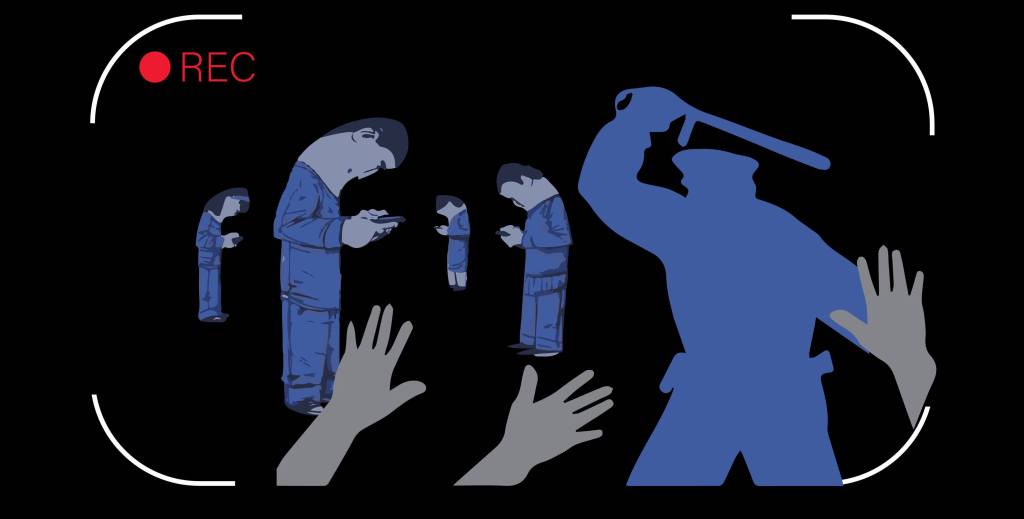
We need to improve as a whole, and society is not going to be better if we simply continue to respond to major issues of racism through performative actions through Social Media platforms. 

As a society, we need to go beyond Social Media posts and instead, continue the conversation, educate yourself and stay on top of the news. 

While everyone wants to be Superman, being Kent is the challenge the society needs to overcome. 

Feel free to submit to our blog through the following portal:
https://docs.google.com/forms/d/e/1FAIpQLScraAyQ6rfRbVMSKQ-DSYWX6VvdMB16HkcS6TF_VY9O1zkGKQ/viewform?usp=sf_link

The Angry Black Woman

Written By: Danielle Pinder

Like many mixed race individuals, growing up I struggled with my identity. In my mind, black was a bad word and I feared claiming it as my own. I wished to put as much distance between my black roots and my identity, hoping that the tie between the two would eventually snap. I wanted to be seen as a strong woman, but not too strong. I wanted people to hear my ideas, but not too loudly. I wanted to stand up for what I believed in, but softly enough that no one would get offended. How could I not fear this part of my identity when even fame and achievement cannot protect influential black women from society’s imposed stereotypes? When Serena Williams expressed her frustration during the U.S. Open women’s singles final match, tabloids belittled her actions as a tantrum. When Michelle Obama was on her husband’s campaign trail, her speeches were manipulated into an attitude problem. It appears that whenever black women show any negative emotion, they are dismissed as an “angry black woman”. Although this bigoted trope is rooted solely in racism and ignorance, I have a few ideas as to why black women might be angry. 

Black women might be angry because the gender gap is only the tip of the iceberg in regards to the hurdles they must overcome in the workplace. In the legal profession, 66% of black women have been excluded from networking opportunities, compared to only 6% of their white female counterparts (1). Perhaps they are angry because they are frequently failed by the healthcare system due to discrimination from healthcare workers, as well as the erosion caused by the chronic stressors they face in daily life. In fact, black women are five times more likely to die during childbirth (2). Black women might be tired of the hyper-sexualization they face in the media. This translates into their dating life, as it often prompts fetishized comments like “I’ve never been with a black girl” or “you look so exotic” (3). Maybe black women are angry because the world seems to only care about black lives when they are being killed. It could be because of the many corporations who are treating BLM as a trend or a way to prove they are “woke” before educating themselves on the basis of the cause (4). Black women might be tired of the posts, the hashtags, the “keeping in your thoughts and prayers” followed by utter inaction. Their anger might be based on the observation that the world seems to only now be waking up to the reality black folk experience on a daily basis. Maybe their anger has been inherited from those who have come before them, furious that they are still forced to fight for their right to exist in this world. However, it could simply be because they are tired of swallowing their justified rage in fear of being discredited as Sapphire. Quite frankly, maybe black women are pissed off that society is still asking why they’re pissed off. 

I can’t speak on behalf of all black women, but I know that I’m angry because I’m paying attention. In a matter of weeks, our timelines were flooded with countless posts, petitions, and resources highlighting the injustices endured by the black community on a daily basis. If you’re not angry about the current events, regardless of your race or gender, you’re part of the problem. 

Sources:

  1. https://www.americanbar.org/products/ecd/ebk/217591/
  2. https://www.telegraph.co.uk/health-fitness/body/black-mothers-five-times-likely-die-childbirth-done/
  3. https://digitalcommons.tacoma.uw.edu/gender_studies/22/
  4. https://www.nytimes.com/2020/05/31/business/media/companies-marketing-black-lives-matter-george-floyd.html 

Feel free to submit to our blog through the following portal:
https://docs.google.com/forms/d/e/1FAIpQLScraAyQ6rfRbVMSKQ-DSYWX6VvdMB16HkcS6TF_VY9O1zkGKQ/viewform?usp=sf_link

“Matters is the Minimum”

Written and Photographed By: Leah Biberdorf

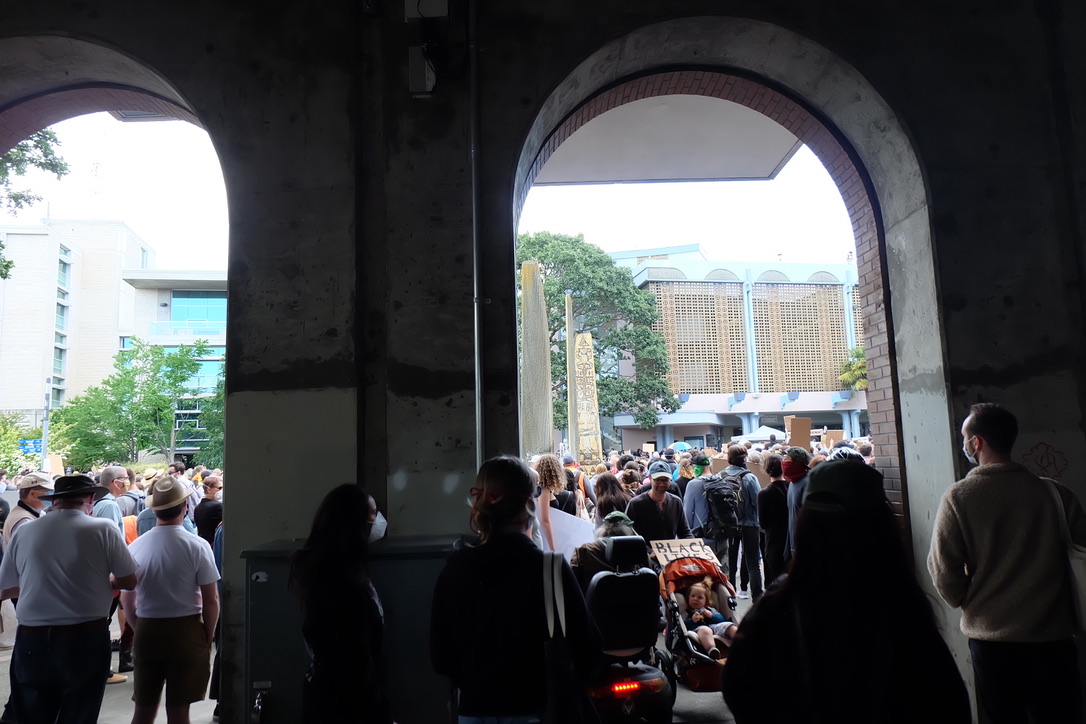
In the midst of one of the greatest health pandemics, the biggest civil rights movement ever recorded is happening. Not in some far off news story that gets broadcasted for ten minutes but right in our own countries, cities, and homes. The death of George Floyd has rightfully sparked a change that the world can no longer come back from and it is not just people of colour who are fighting. As a young caucasian woman who strongly believes and supports the Black Lives Matter movement, going to a local rally and protest was something I felt I needed to do. 

I live in Victoria, British Columbia; a little city on an island. To set the scene: if you were to ask most white adults who live in our main neighborhoods, they would most likely agree with “Canada’s not racist” or “ Canada is much better than the States”. British Columbia itself is home to roughly one percent of the black population in Canada, so as a caucasian individual blinded by privilege, there is no racism.

The majority of Victoria’s residents are sheltered from the painful reality that racism is a current and present issue that must be dealt with.

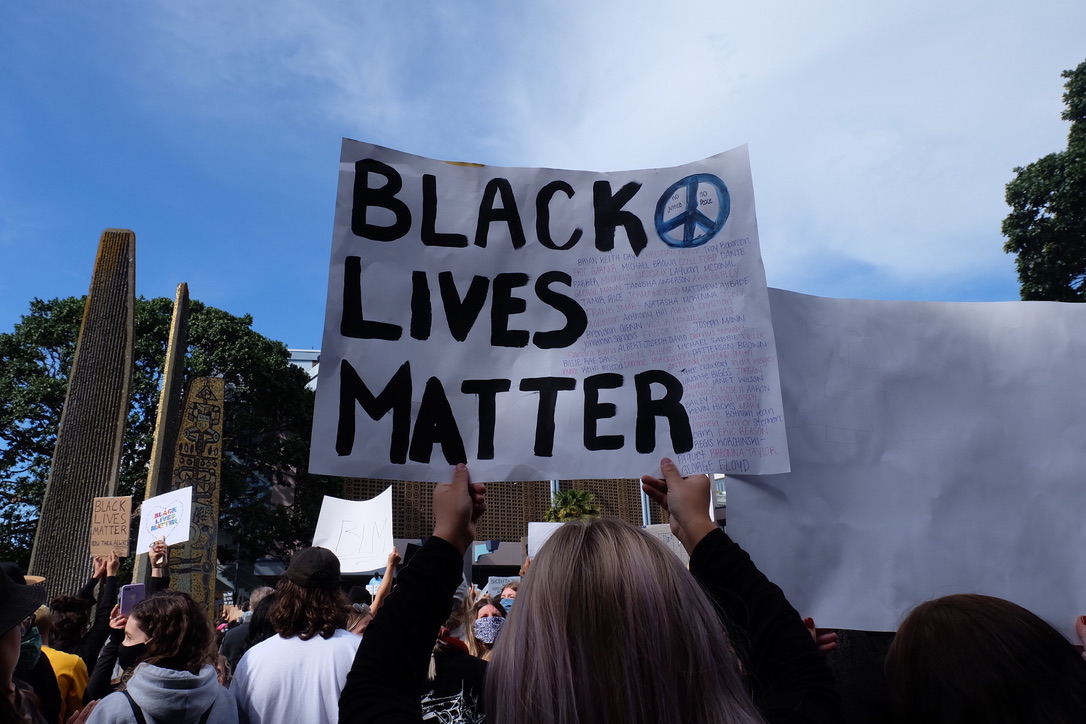
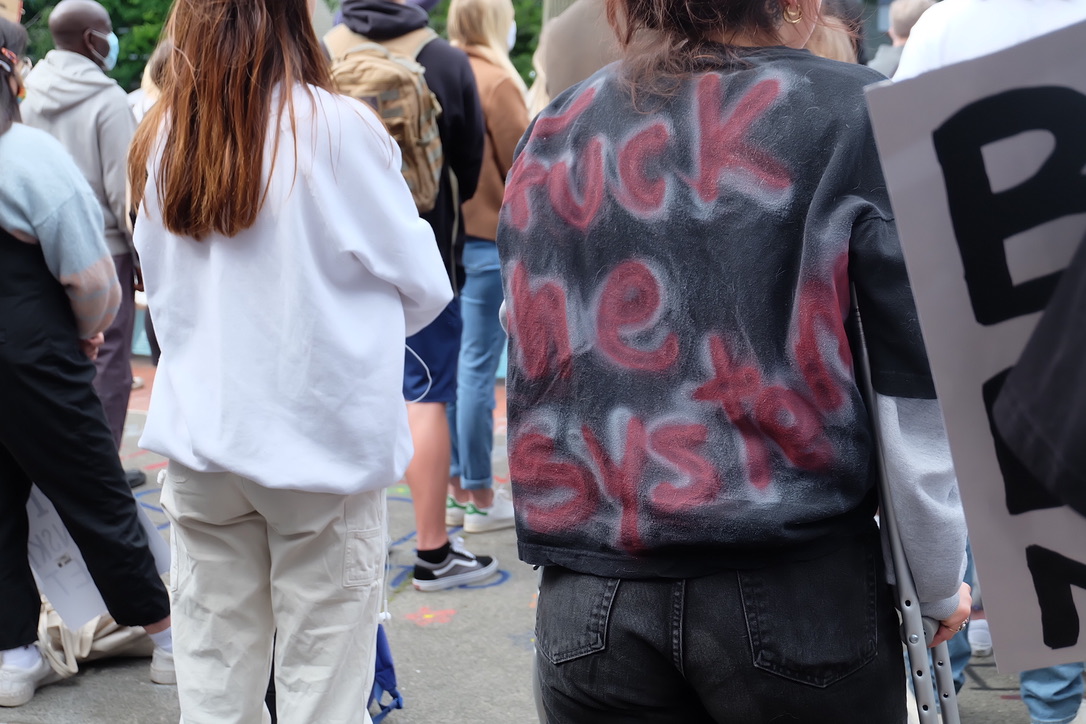
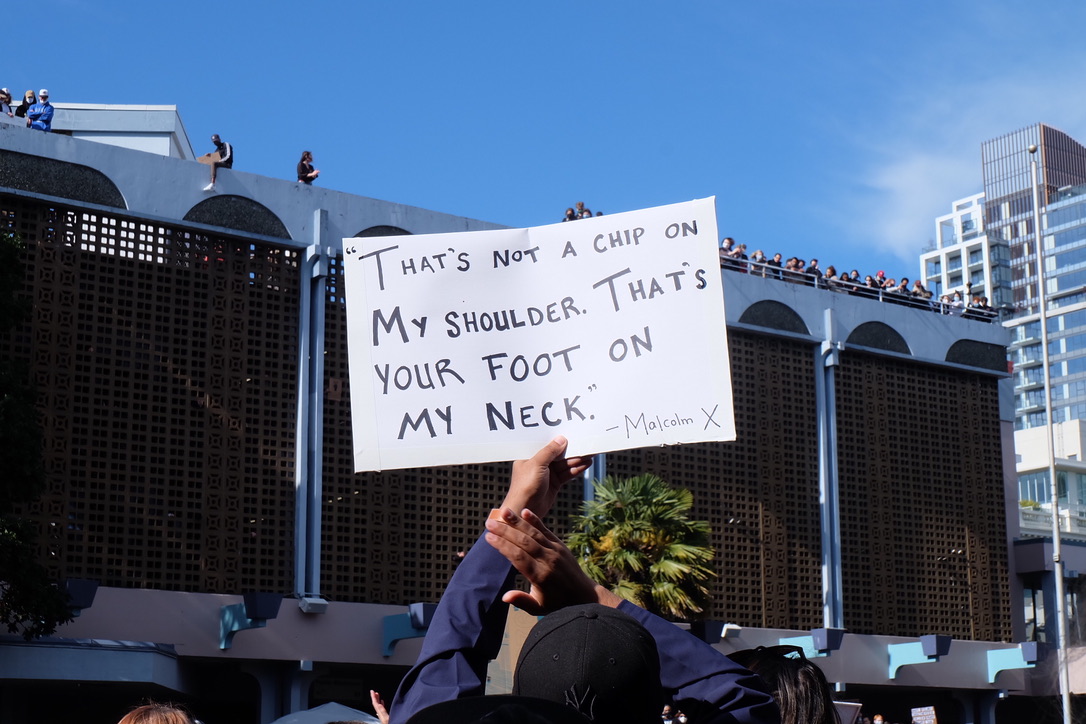
Being nineteen, white, and aware of the effects that my white privilege can have, I knew that it was my responsibility to go and support the black community at the black lives matter protest. It was held central downtown in an area that was impossible to ignore. The official start time to the protest was 4pm and by that time there were roughly 500 people in attendance. The crowd composed individuals of all races, ages and genders; different communities came together to raise awareness and generate change. 

The rally organizer began with a warm welcome, chants of Black Lives Matter, and compelling stories that were not to be overlooked. She then gave us, the audience, a plea to not provoke the police. The riots happening all around the world were something that I had been actively following and I knew going into the protest that it was a possibility but hearing her ask us, cemented the dangers she could be facing in my mind. If someone were to ask me now if I’d fight against the police during a protest, I’d say yes in a heartbeat but the consequences are harshly different for people of colour. 

The rally continues with story after story. Black and Indigenous men and women standing up and sharing their experiences; the very real Canadian experiences that go undiscussed. Fathers who would never see their daughters again because they looked suspicious, multiple cases of people dying under the police’s care, or the microaggression that are continuously streaming from ignorant individuals. It was all heart breaking. The stories went on for hours and my feet were definitely hurting, but that pain paled in comparison to the horrors that BIPOC individuals have to face; I had nothing to complain about.

The crowd was organized so that black individuals were standing on an elevated ground, all together to share their stories with us. We said their names and we said how they died; out loud and nowhere to run from the ugly truth. 

As it was time for me to leave the protest, I thought to myself what I wanted my takeaway from the experience to be. And then I back tracked that a few steps. It was not time for a take away because going to a protest wasn’t going to fix anything and I had a lot more work to do. There is work to be done on all ends of the Black Lives Matter movement and I hope to use my white privilege to help make black voices heard. It is not the time for white people to be fighting, it’s not our fight, it’s our fault. Educating yourself on how you can do better is the least someone with such privilege can do. 

Feel free to submit to our blog through the following portal:
https://docs.google.com/forms/d/e/1FAIpQLScraAyQ6rfRbVMSKQ-DSYWX6VvdMB16HkcS6TF_VY9O1zkGKQ/viewform?usp=sf_link

Resources: Ways You Can Help

Written By: Niroshini Mather

DONATIONS:

For the Victims 

Official George Floyd Memorial Fund – The Official George Floyd Memorial Fund 

I Run With Maud – I Run with Maud 

Justice for Breonna Taylor – Justice for Breonna Taylor 

For Protestors : 

https://bailfunds.github.io/ – A list of Community Bail Funds Organized by States & Cities  

Donating Without Money: 

Please watch turn your adblock off and watch the videos below to completion. All adsense from the video will be donated toward organizations in support of the BLM movement. 

https://www.youtube.com/watch?v=NokTSpMH44A&list=PLVdSxvNLYDJwSBhbCVBqBRaX5uxovsLYK -Playlist 

ORGANIZATIONS TO SUPPORT:

International Organizations  → 

Black Lives Matter 

NAACP Legal Defense Fund – an American llegal organization fighting for racial justice

National Police Accountability Project – a non-profit organization promoting the accountability of law enforcement officers & their superiors 

Canadian Organizations →  

Black Youth Helpline 

Black Legal Action Centre – a non-profit community legal clinic that provides free legal services to low/no-income Black Canadians in Ontario 

Black Health Alliance – reducing health disparities and promoting the well-being of black communities 

Black Lives Matter Toronto 

Freedom School Toronto – initiative by youth and parents to reduce anti-Black racism in the school system

Black Women in Motion – Toronto based organization focused on empowering black women 

Harriet Tubman Community Organization – empowering black youth in the community 

PETITIONS TO SIGN:

Justice for George Floyd PetitionJustice for George Floyd 

Amnesty International Petition for George Floyd  

https://docs.google.com/document/d/1roduncOZ_y0C_oWIMIQ6yV-13fZqck0i54RZoPSwYBw/mobilebasic?fbclid=IwAR2iMrvISKMENy2NlunDQQx8_03q9GCdbzodDh8Vowt5ofcTc97DwYliynQ – Toronto Police Call for Action/Defunding 

Justice for Breonna Taylor Petition– Justice for Breonna Taylor 

Hands Up Act Petition – The proposed Hands Up Act would ensure a mandatory sentence for police officers who shoot unarmed citizens 

Demand racial data on police involved deaths in Canada  

Justice for Regis Korchinski Petition – Justice for Regis Petition 

SUPPORT BLACK-OWNED BUSINESSES:

Toronto List

Vancouver List

Montreal List

Ottawa List

FILMS TO WATCH:

13th –  The documentary explores racial injustice in the United States with a focus on mass incarceration. 

I am Not Your Negro – The 2016 documentary explores the history of racial injustice in the United States 

Selma – A historical drama film which is based on the 1965 Selma to Montgomery voting rights marches. 

The Hate You Give – An American drama film that takes on the issue of police brutality

If Beale Street Could Talk – A drama film following a woman seeking to clear her wrongly charged partner’s name

Just Mercy – A legal drama film retelling the story of Walter McMillian, a youg defense attorney who helps appeal Brian Stevenson’s murder conviction 

Fruitvale Station – A biographical drama film retelling the events leading to the death of Oscar Grant

Malcom X – A biographical drama film about the African-American activist, Malcom X

12 Years A Slave – A dramatic film adaptation of the 1853 slave memoir Twelve Years a Slave by Solomon Northup, a African-American man kidnapped into slavery 

BOOKS TO READ: 

Fiction → 

I Know Why the Caged Bird Sings by Maya Angelou 

Beloved by Toni Morrison

White Teeth – Zadie Smith 

Their Eyes Were Watching God: A Novel by Zora Neale Hurston

Non-Fiction → 

Sister Outsider by Audre Lorde

The Fire Next Time by James Baldwin 

The Warmth of Other Suns by Isabel Wilkerson 

Are Prisons Obsolete by Angela Y. Davis

So You Want to Talk About Race by Ijeoma Oluo 

How To Be AntiRacist by Ibram X.Kendi

Why I Am No Longer Talking to White People About Race by Reni Eddo-Lodge

When They Tell Call You a Terrorist: A BLACK LIVES MATTER MEMOIR by Patrisse Cullors & Asha Bandele

POETRY TO READ:

The Crown Ain’t Worth Much by Hanif Abdurraquib 

Citizen by Claudia Rankine 

Don’t Call Us Dead by Danez Smith 

American Sonnets For My Past & Future Assassin by Terrance Hayes 

PODCASTS TO LISTEN TO:

Seeing White 

NPR’s CodeSwitch

1619 

About Race

Pod Save The People 

T.V. SHOWS TO WATCH:

When They See Us – A drama miniseries based on the infamous 1989 Central Park jogger case 

Dear White People – A comedy-drama tv series following a group of black college students 

Educational Resources To Check Out: 

https://oyc.yale.edu/african-american-studies/afam-162

(Yale University is offering an open course called African American History; From Emancipation to the Present that explores the history of African Americans) 

Anti-racism resources for white people

Black Lives Matter Toolkit 

Twitter Thread on How Check on Your Black Friends & Family

Google Drive with BLM & Anti-Racist Resources for Teachers 

ADDITIONAL LISTS OF RESOURCES:

https://docs.google.com/document/u/1/d/e/2PACX-1vSrT26HMWX-_hlLfiyy9s95erjkOZVJdroXYkU-miaHRk58duAnJIUWKxImRkTITsYhwaFkghS8sfIF/pub?fbclid=IwAR2MkWOvko3tDOTmH69cxYKFq1YxFCgKccXmDoOdyq6_7IcgXyf3yyToSi4  

https://blacklivesmatters.carrd.co

Feel free to submit to our blog through the following portal:
https://docs.google.com/forms/d/e/1FAIpQLScraAyQ6rfRbVMSKQ-DSYWX6VvdMB16HkcS6TF_VY9O1zkGKQ/viewform?usp=sf_link

What is a Woman of Colour?

Written By: Shayla Joshi

What is a Woman of Colour (WOC)? Who qualifies as a WOC? Questions paralleling these are observed as the focus of discussion within a variety of fields, ranging from academia to politics. A basic definition of a woman of colour would be: a female person of colour. Simple, right? Not necessarily— this question leads to another: what is a person of colour? By the same logic used to define a woman of colour, a person of colour would be described as any individual who is not considered “white.” This simplistic definition of a woman of colour seems to stem from a sequential analysis, however, this does not seem sufficient to answer our leading questions. To truly develop a well rounded definition of a woman of colour we must consider its origins.

The term “women of colour” originated from a late-seventies campaign to end violence against all women (wocninc.org). This term was coined to unify all women experiencing a multiplicity of marginalization with an emphasis on race and ethnicity. The political roots of this term are crucial, as they emphasize the significance of analyzing women through an intersectional lens. The oppression that women of colour have endured in the past is an element that should be considered when defining a WOC. Norms molded in the past stand to this day. Recognition of normalization is the first step to deconstructing barriers between sexes and races. 

Race is often seen as a binary of “white” and “black.” This limited view excludes a variety of ethnicities from representation. Some ethnicities that are often overlooked include Latinx, Asian, and Indigenous women among other groups. Hence, we should define a woman of colour as any woman who faces life through the secondary pressure of race as a marginalized denomination. 

A key aspect when defining a WOC is self-identification— whether or not a woman herself believes that she qualifies as both a woman and a person of colour. Considering how the term came about through  political power struggles is essential when curating a definition in order to highlight the preexisting conditions of inequality. Given this analysis, it seems appropriate to define a woman of color as “a self-identifying woman who experiences marginalization at the intersection of race and gender.” 

Understanding the definition of a WOC is important for individuals in an ongoing process of self-identification and self-discovery. Defining a WOC leads to the question: what does WOC mean to you? 

Feel free to submit to our blog through the following portal:

https://docs.google.com/forms/d/e/1FAIpQLScraAyQ6rfRbVMSKQ-DSYWX6VvdMB16HkcS6TF_VY9O1zkGKQ/viewform?usp=sf_link

Meet Our Exec!

Yasmeen Choudhri: Co-President

Yasmeen is a second year Life Sciences Specialization student at Queen’s. She was born and raised in Ottawa but has mixed Pakistani and Yemeni roots. Yasmeen is very passionate about peer support and representation for women of colour in STEM fields. In her spare time, she enjoys travelling, and having impromptu dance parties with her friends.

“There’s really no such thing as the ‘voiceless.’ There are only the deliberately silenced, or the preferably unheard.” -Arundhati Roy

Danielle Pinder: Co-President

Danielle is a second year Life Sciences student at Queen’s University. She was born in the GTA and raised in Pickering, Ontario. Both of her parents are immigrants from Trinidad and Tobago, so Caribbean and South Asian culture played a prominent role in her upbringing. Danielle is passionate about addressing the barriers faced by various marginalized groups and hopes to pursue a career in healthcare. Danielle spends her free time grabbing coffee with friends and re-watching episodes of How I Met Your Mother.

“If the first woman God ever made was strong enough to turn the world upside down all alone, these women together ought to be able to turn it back , and get it right side up again!”- Sojourner Truth

Julia Braganza: Treasurer

Julia is a second year majoring in psychology along with the physical activity and disability certificate. She was born in North York and currently lives in Markham, and her cultural roots are from Goa, India. Julia is interested in promoting equal opportunities across diverse cultures and for people who are differently abled. She hopes to pursue a career in occupational therapy or counselling psychology. Julia loves cooking, baking, FaceTiming friends, and watching Netflix. Her favourite shows are Jane the Virgin and This is Us. 

“ In diversity there is beauty and there is strength” – Maya Angelou

Alina Asghar: Events Coordinator

Alina is a second year Life Science major at Queen’s University. She lived in Toronto growing up and moved to Kingston before high school. Alina is passionate about medicine and hopes to pursue a career in pharmacy. She loves spending her time (mostly procrastinating) watching the Raptors. 

“I firmly believe that through peace, love, respect, and mutual understanding, we will be able to provide a helping hand that will empower each woman to reach out like a sister to one another. “-Zainab Khan

Shayla Joshi: Blog Coordinator

Shayla is a second year Psychology student at Queen’s University. She was born in Ottawa, and has spent her entire life surrounded by a traditional Hindu culture. Shayla is passionate about equity and wishes to pursue a career in law. She loves spending her spare time watching any (and every) romantic comedy on Netflix

“Each time a woman stands up for herself without knowing it possibly, without claiming it, she stands up for all women.” —Maya Angelou

Joey Lau: Graphics Coordinator

Joey is a second year Political Science student at Queen’s University. She was born in Toronto and raised into traditional Chinese Buddhist culture. In her spare time she enjoys, creating graphic designs, cooking and watching extremely bad movies. Joey is particularly interested in pursuing a career in law or design. 

“How about a girl who’s got a brain. Who always speaks her mind.” – Mulan

Design a site like this with WordPress.com
Get started