Humans of Queen’s

a QWOCC x QBFA collab

QWOCC is so excited to have collaborated with Queen’s Black Fashion Association (QBFA) on the Humans of Queen’s photo series to explore the ways in which women use fashion to express their identity. Founded in May 2021, QBFA is a rapidly growing club on campus that facilitates an inclusive, safe environment for like-minded individuals who share a passion for the fashion industry. This club is an environment where trends, diversity and other fashion-related topics can be discussed. Much like QWOCC, QBFA welcomes all individuals who are willing to contribute to a positive welcoming environment with a focus on inclusivity. Both clubs have created a community on campus to discuss the struggles that people of colour endure. QWOCC and QBFA intersect in this way, and so, we created Humans of Queen’s

For centuries, fashion has been used as a means of expression and discovery. Through clothing, individuals are able to explore their own identity, communicate their identity with others and experiment with different styles.

The Humans of Queen’s photo series was created virtually and in person. We launched a google form wherein individuals were invited to share an image and add commentary linking this image with what fashion means to them. In person, we approached students on campus and asked if they were willing to take a photo and discuss how they use their fashion as a means of expression or as a link to their identity. 

Please enjoy the following photos and captions, this is: Humans of Queen’s. 


“I wouldn’t say I’m a very creative person but fashion is a way for me to stay creative. I love seeing what fdifferent stylists create with simple pieces and I think everyone has a say in the fashion world !!”

– Charisse Lee

“Fashion to me is a way of expressing myself to the world and displaying a bit of my personality”

– Alyssa (pictured on the right)

“For me, picking out my outfit every morning is one of the biggest deciding factors in how the day ahead of me is shaped. Fashion is more than just fabric and colour – it’s a way of showing those around me how I feel, and what I’m thinking. And to me, that’s the best way for me to let others get to know me”

– Kiana (pictured on the left)

“Fashion to me means individuality. It’s how you want to present yourself to the world!”

-Victoria
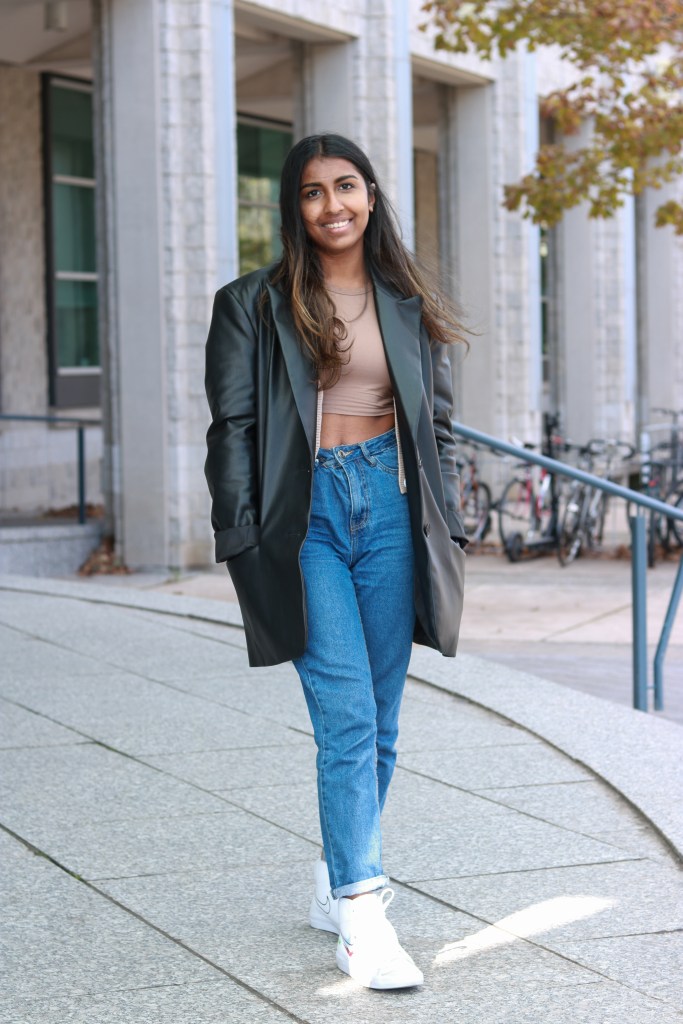
“I love fashion because it can be inspired by places you’ve been and people you’ve met. Some things can even influence you without you directly being in contact with it. It’s constantly evolving and reflecting your life experiences”

– Sharon
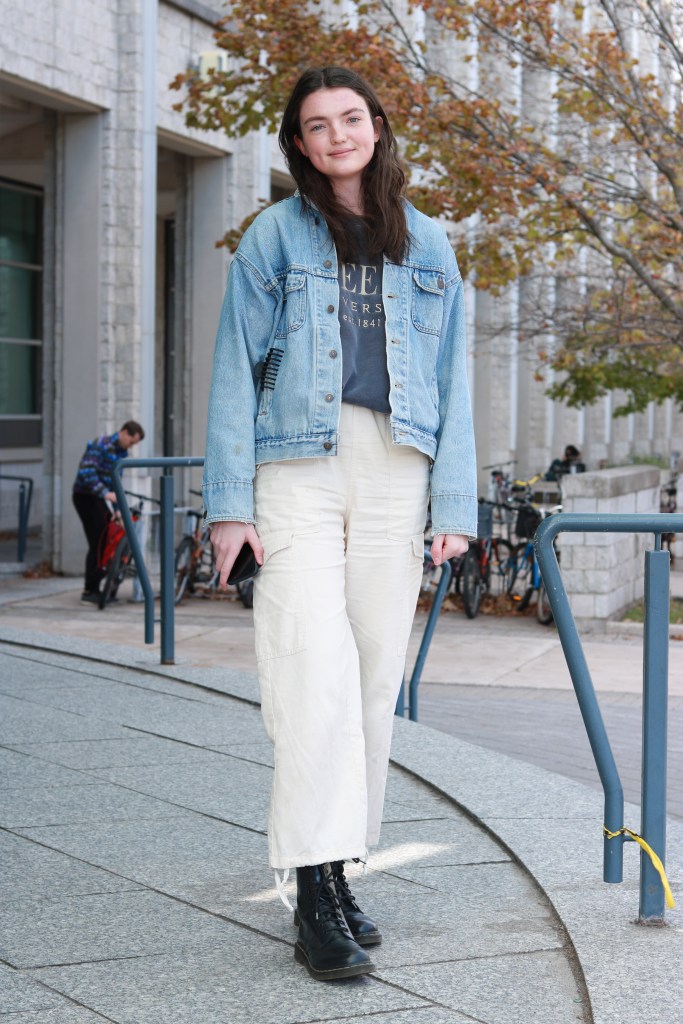
“I love fashion because it’s a form of creativity, self-expression, and a reflection of my mood on a given day”

-Celia
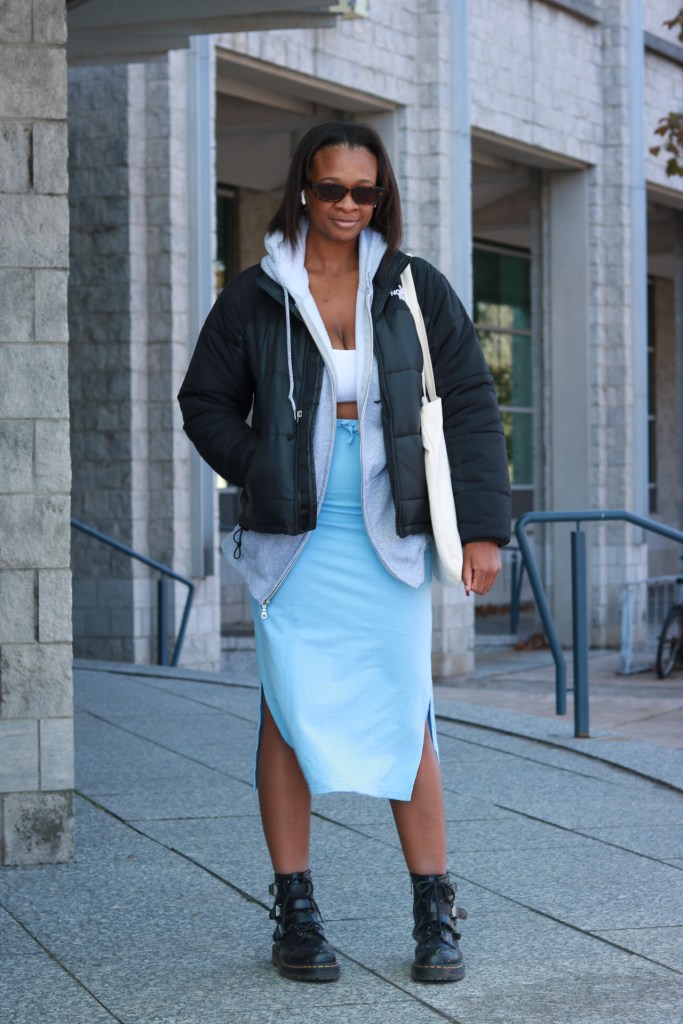
“Fashion means self- and gender- expression”

– Mayah

“Fashion, for me, means to be able to express my internal self in my physical appearance. It is an extension of my personality and character. It is not an objective notion for people to judge, but a subjective one that tells the people around me what kind of person I am”

– Jess
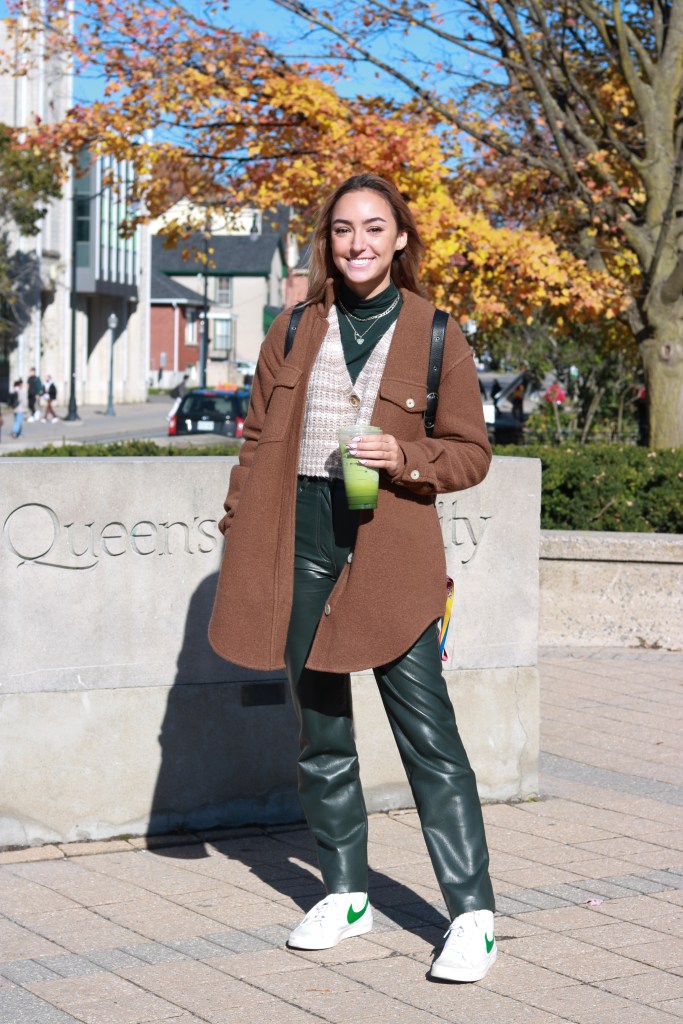
“Way to express yourself & show creativity through what you wear”

– Kennedy
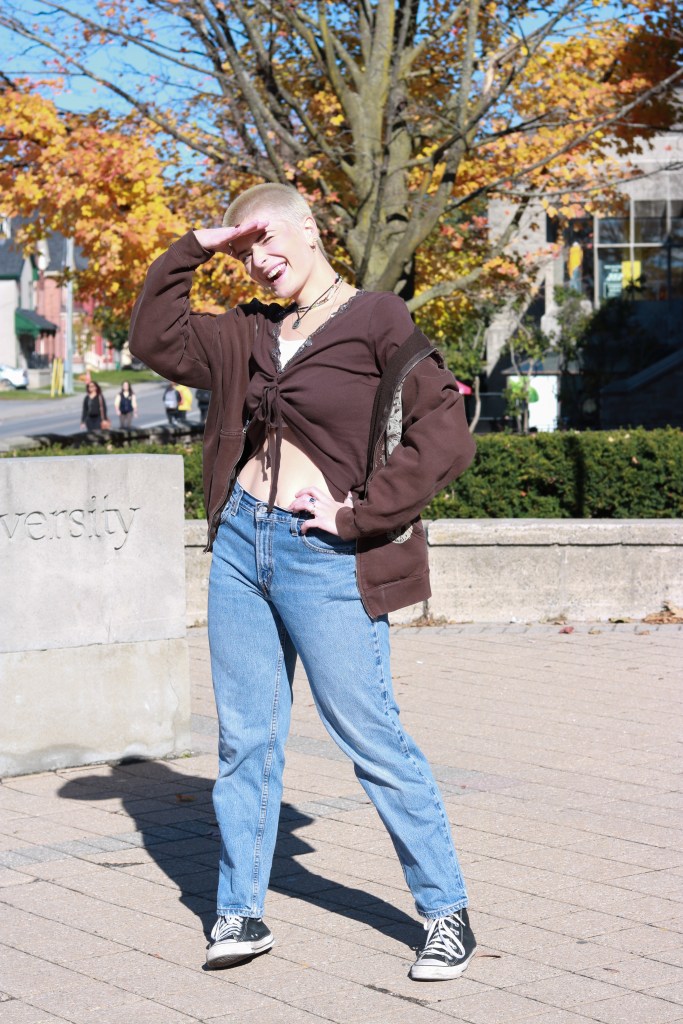
“I think fashion is a way of attracting the right people for you. It’s a visual language that people absorb instantly, especially strangers. If you adorn yourself with things that bring you joy, I think that honest style attracts genuine connections with people who share the same interests and aesthetics”

– Martha

“Fashion is a way I introduce myself without having to say a word. It makes me feel confident and I get to express myself without having to do or say anything. It makes it easier to talk to other people, it breaks the awkward initial barrier. If you see someone with a fashion item you like, you feel more inclined to come up and have a conversation with them”

– Jaida
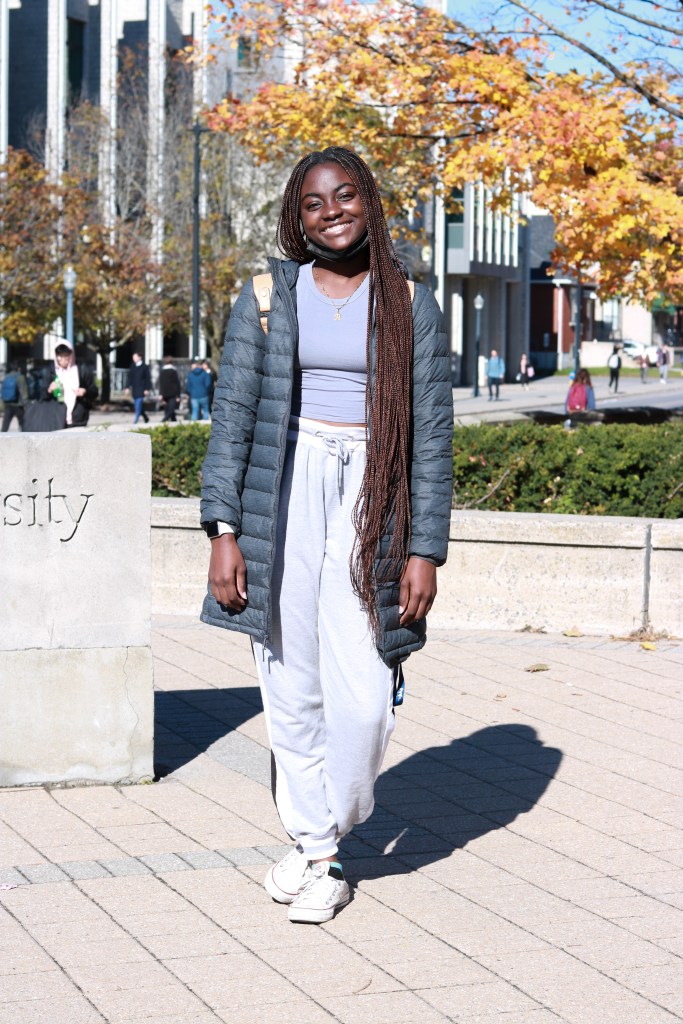
“Fashion, to me, is a way of expressing oneself, and can be representative of who someone is or can be”

– Michelle
Book Review: Ecocriticism and Ecologism

Written by: Yiyi He

Ecocriticism and Ecologism by Chinese ecocritic Wang Nuo constructs a theory of ecocriticism with uniquely Chinese characteristics, comprehensively discussing ecologism as one of the foundations of ecocritical theory and analyzing and responding to more than one hundred of the most controversial and mystifying issues[1] in the field of ecocriticism and ecological thought both at home and abroad. Ecocriticism and Ecologism as a monograph, confronts both intellectual and academic issues concerning the definition of ecocriticism and ecological literature, the basic principles of ecological aesthetics, the legitimacy of ecological literature and ecocriticism in advocating on the behalf of nature. The text is instrumental in promoting the study of Chinese ecological civilization at a deeper level as well as being a reference on Chinese ecological civilization and on improving ecologically driven developmental strategies.

The Greek word for “ecology” is Oikologie which is composed of the Greek words “home” (oikos) and “learning” (logos). Therefore, ecology becomes literally “the study of home,” which is concerned with a view of living things in their home environments. As a natural science, ecology (evolved from “oecology”) was originally a subdiscipline of biology. German biologist Ernst Haeckel first proposed ecology as a separate discipline in 1866, referring to it as the science of the relationship between living things/organisms and the external world (61). The etymology for the word “environment,” originates from the word “environ,” which describes one’s surroundings with humans as the center of interest. This indicates an anthropocentric tendency specifically, which makes it difficult for environmentalism to shake off foundational limitations.

In Wang’s opinion, “ecological culture” (including eco-literature, eco-philosophy, eco-aesthetics, eco-history, etc.) is not the ecologization of culture, nor is it a cultural system that simulates or imitates the morphological characteristics of an ecosystem; nor is it the study of culture through methods of ecology, biology, and other natural sciences (2). Although eco-culture is related to natural sciences such as ecology, it is not the object of natural science research, nor is it simply the sum of ecology and culture (3). The term eco-culture is composed of two parts, “ecological” and “culture”, with the qualifier “ecological” referring primarily to ecological philosophy, which is guided by ecologism (3). Thus, ecological culture is a culture based on a holistic ecological thinking.

At its core, ecologism is ecological holism, which is the result of a systemic, connected, and harmonious view of ecology, straight from the ecological thoughts of the likes of Jean-Jacques Rousseau and Charles Darwin, Martin Heidegger’s ecological philosophy, as well as contemporary holistic ecological concepts such as land ethics, deep ecology, and the Gaia hypothesis (58). The core foundational concepts of ecological holism are to regard the overall interests of the ecosystem rather than the interests of human beings as the highest value; to see whether a thing is conducive to maintaining and protecting the integrity, harmony, stability, balance and sustainable existence of the ecosystem as the fundamental measure of all things, serving as the ultimate criterion for judging human thought and culture, lifestyle, scientific and technological progress, economic growth and social development (141). Wang’s ecologism advocates pluralistic coexistence and therefore welcomes all ideas, research, and actions that advocate the protection of nature and oppose traditional anthropocentrism, regardless of whether they are based on weak anthropocentrism or dualism (8). In contrast, so-called “environmentalism” springs primarily from either weak anthropocentrism or modern anthropocentrism (58). The basic principles of environmentalism are to protect the environment for the sake of the sustainable survival and development of human beings and the basic rights of future generations, predicated upon the realization that the natural environment is deteriorating and threatening the survival of human beings; to use environmental resources rationally and to expand human ethical concerns to include animals, plants and non-living things; and to uphold anthropocentrism and dualism through the preservation and moderate improvement of the existing culture and modes of production and lifestyles of human beings (63-64). Wong also distinguishes anthropocentrism from humanism. He contends that humanism includes two main aspects. One is to advocate for human rights within the human-oriented social sphere and the second is the assertion of human centrality and dominance in the relationship between humans and nature, which is the core of anthropocentrism (118). The latter is a key site of contention between eco-holism and environmentalism.

Sharp ideological confrontations between environmentalism and ecologism are both profound and widespread. They differ on such major issues as anthropocentrism versus ecological wholeness, dichotomies versus unity, the objectification of nature versus the subjectification of nature, conquest and plunder versus harmony and sharing, possession versus survival, motivation based in the satisfaction of desire versus motivation based in personal development, consumer culture versus the simple life, subverting the laws of nature versus an observance of the laws of nature, sustainable development versus affordable development, technological supremacy versus green technology, environmental protection versus ecological protection, and the culture of reform versus the culture of change (67-70).

Despite the differences between ecologism and environmentalism, the two are obviously not opposed to each other in every way. Ecologism fully recognizes the important contributions of environmentalism to the protection of the environment as well as the popularization of environmental awareness. There is a respect for its ideas and even a consideration for environmentalism as an ally, developing side by side with environmentalism while maintaining its own ideas in a clear-cut manner (8).

The promotion of ecological thinking and the construction of an ecological civilization is a long and difficult process but academic debates between ecologism and environmentalism should strive to promote such exchange and cooperation based on shared values rather than impeding one another based on differences in approach or theory. This book serves as a guide book for ecocritics in China and beyond to delve deep into relevant key concepts and debates in the field.


Wang, Nuo. Ecocriticism and Ecologism, People’s Publisher, 2013.

[1] For instance, the distinctions between ecologism and environmentalism, ecological justice and environmental justice, ecocentrism and ecological holism, ecologism and ecological humanism, affordable development and sustainable development, etc.

“Never Have I Ever” Experienced Representation

Written by: Serena Sengupta

Growing up, I longed to see someone like me in the media. 

All my friends in elementary school had their idols – Hillary Duff, Vanessa Hudgens, Taylor Swift. Turning on the television, many of them could easily find a protagonist on any show that they immediately could resonate with; one that shared their own lived experiences. A character that was real; they might have had flaws, but they had depth and dimension, multiple interweaving layers that came together to form the character.

The only female character who “looked” like me was Princess Jasmine — but even then, she was from an Arabic background as opposed to being South Asian, like myself. I clung to this tiniest bit of representation I could find because it was all I had.

In elementary school, my friends and I would play “High School Musical” at recess – we would all pick a character from the movie, and pretend to be them. One of my friends chose to be Gabriella, and the other chose Sharpay. When it came to my turn to pick, they would shuffle uncomfortably, suggesting I play Taylor McKessie, Gabriella’s best friend. I agreed out of fear of being left out of the game, but part of me was saddened — no, disappointed — that they appointed me, the only person of colour in our friend group, to play Taylor, the only main woman of colour in the movie. To complicate things, Taylor was African American as opposed to being South Asian like me. It felt like they didn’t care about me or my background, they didn’t want to learn and educate themselves, and they assumed all people of colour are the same due to the lack of diverse representation. 

Over the years, there was some South Asian representation in television shows, but much was left to be desired. First came the character of Baljeet in the Disney TV series Phineas and Ferb, followed by Karan Brar’s character of Ravi in the show Jessie. Although this was some representation, it played into stereotypes of how South Asians are supposed to act: introverted, ‘nerds’, easy targets for bullies. They had no depth and no realness about them. Both Ravi and Baljeet offered little value to their respective shows beyond comic relief; the forgotten side-kick character whose purpose was to compliment the main character. 

I remembered watching these shows thinking, why don’t I see anyone like me? It was a damper on my self-esteem and made me think that I did not deserve representation in the media.

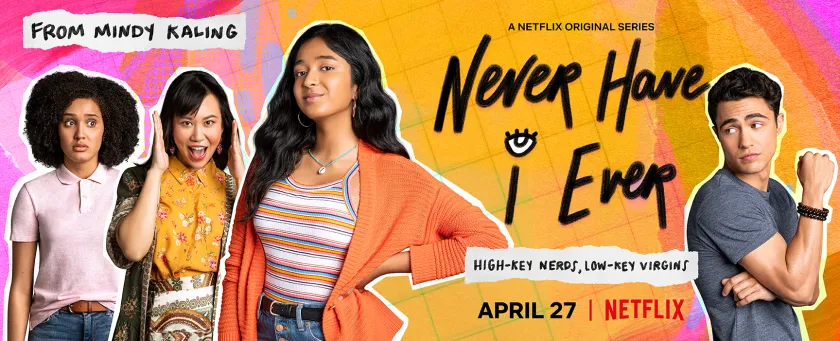
Fast forward to 2020. A new Netflix show, Never Have I Ever, launches and is instantly a hit. The main character? Devi Vishwakumar, an Indian-American teenager. Through seasons one and two, the characters are rich with diversity: Devi’s cousin Kamala, her best friends Fabiola Torres and Eleanor Wong, and even one of the main love interests, Paxton Hall-Yoshida.

​​

Photo from: https://popculturereview.com/tv-news-never-have-i-ever-first-look-trailer-and-photos/ 

Devi is a perfectly imperfect teenager: she makes the worst possible decisions that will have you screaming at your television, she is selfish, and she jumps to conclusions faster than I thought humanly possible. She can be inconsiderate at times and is extremely hotheaded.

She also is determined, hardworking, vulnerable, and compassionate. She feels insecure like any teenager and suffers from ongoing grief at the loss of her father.

Devi is real. She has multiple complex layers, as does any person, and she makes mistakes and learns from them.

The series itself is not perfect. However, watching it for the first time made me feel seen. Topics related to therapy and mental health, dealing with grief at the loss of a loved one, and even an overbearing mother that I had not seen before in this context made me feel like I wasn’t alone in my experiences.

An example of this is the fact that Devi goes to therapy. At first, her mother is not entirely supportive of this and picks jokes around the topic. While for the average watcher this may just seem like an interesting scene, these interactions meant so much more to me.

Mental health is often misunderstood in Asian communities, and it is not a topic that can always be openly discussed. It is often seen as a “Western concept” and a sign of weakness. The inclusion of this serious topic is crucial for viewers to know that their experiences are not isolated, and to see resolutions of it in the media.

Seeing proper representation in the media is powerful. It sends the message that everyone is welcome, and everyone has a place in the world. Never Have I Ever is one step closer to a world of representation in the media.

Sapphire

Written by: Dalyah Schiarizza

So sassy, Sapphire.

Quick-witted tongue.

Sharp mind.

Bold with an attitude.

So sassy, Sapphire.

When I was told about the prompt for this month, I was immediately reminded of this common stereotype for Black women that has snuck its way into the media. I also greatly suspect it won’t be leaving for a very long time. The sassy, take-nothing-from-no-one, angry-with-an-attitude, “ghetto” Black woman is the Sapphire stereotype. It is not difficult to find characters in TV and film aligned with this stereotype, such as Cookie from Empire or Madea from the Tyler Perry movies. The name “Sapphire” actually comes from an old radio show called Amos’ n’ Andy. The show featured a character named Sapphire that was sassy, rude and aggressive towards her husband. This stereotype was dubbed the “Angry Black Woman” that many of us know today and have seen used against passionate Black women. Even though these women are strong and confident, it is based on a stereotype that all Black women have this angry persona and take it out on everyone else.

With this stereotype, in particular, there’s a common question of whether or not it’s a “good thing” because it initially comes off as portraying Black women as strong, confident and resilient. In my opinion, it does more harm than good since it insinuates that Black women must be strong because the world is so cruel. There is no attention to the need for the world to improve so that Black women don’t have to fight twice as hard for the same rights and respect that their white peers receive. It is incredible that Black women are often respected for their resilience. Still, it diverts attention away from the issues that require us to be so resilient. I ultimately wish for a better world where racism and misogynoir don’t exist so Black women aren’t expected to always be strong. As human beings, our mental health fluctuates. So we should feel safe to express that, which can already be very hard, without the additional stress of not living up to this untrue and unattainable standard.

Now I want to discuss some of my experiences with the Sapphire stereotype. As a biracial Black woman, I don’t experience this stereotype to the most extreme. Still, I have experienced it quite a bit living in a white dominant area. I wish I could count how often white people have been surprised by my voice and tone, which is relatively soft when I’m in public places. This stereotype is so deeply ingrained in people’s minds that they’re actually taken aback when encountering a Black woman who doesn’t fit into the Sapphire box. There are some other cases where I speak in my actual voice, using my sense of humour, which becomes the expectation for who I am. It’s not because of my true character, but because people catch a glimpse of this and my complexion and assume that relationship. When I speak comfortably, like not always pronouncing the “g” at the end of some verbs, white people sometimes look at me differently. They look at me with interest for aligning myself with this stereotype but also with some hesitancy because I don’t sound like them all the time. They think I either act “too ghetto” or “not Black enough,” which is offensive in itself for assuming a relationship between the two and pushing that onto me. Or when I do really focus on my enunciation and diction, they often act surprised and say how I’m “so well spoken.” This has made it relatively hard for me to decode my sense of self. I end up asking myself, “Am I actually funny or is my wit and sarcasm putting me in a box?” or “How often do I have to actively monitor my tone?” It can be hard to navigate because these are aspects of my personality and upbringing that have made me who I am. Still, at the same time, I don’t want to establish or perpetuate stereotypes. It can come across as that because of the lack of mainstream understanding of the Sapphire and its adverse impacts. In these cases, I find myself very disappointed with society because it can’t change enough to disregard these stereotypes and move past confining Black women into offensive categories.

Throughout my life, I also have had some experiences being portrayed as the “Angry Black Woman.” As I became more and more aware of social issues around me, I became less and less compliant when I saw it. For example, when my peers were openly making sexist and racist comments, I was “angry” or the “blue-haired feminist” when I offered any kind of rebuttal. To this day, I find it remarkable that even though the other party was wrong for their commentary, I was the one vilified for trying to intervene. I was made to seem angry over nothing, loud and rude for ruining their “fun.” At the time, I just thought that they didn’t want to appear in the wrong. I now realize it contributed to this concept of Black women always being angry and having a bad attitude towards everything.

Stereotypes like the Sapphire will likely exist in the media forever. They will follow me around for a very long time. The more we can learn about these stereotypes, the more we can push them out of the media and eliminate these racist expectations for Black women. With further discourse and sharing, many more people will recognize the Sapphire and understand why it’s wrong. The Sapphire stereotype, and others like it,can have substantial adverse effects for Black women and have influenced how I see and understand myself. Just as I started this post, I want to end it with some words I came up with while really reflecting on the Sapphire.

I’m not aggressive, I just don’t talk to you like you’re a kid. I just don’t act like some damsel in need of your opinion. I’m not angry, I’m just not compliant. I have no desire to listen and watch your offensive commentary. I’m not “ghetto,” I just embrace parts of my culture. I’m not sassy, I just have a sense of humour. A sense of humour, kind of like yours. I guess it’s different for me. Different for me, because I’m not white-passing. Different for me, because I speak a little differently. With a bit of style and flair, not that different from you. But I’m not white-passing, so I guess it’s different for me.

Who Does This Benefit?

Written by: Ana Storer

Social media activism has been used in so many ways to help amplify voices, educate people, and make meaningful change. From the #MeToo movement to amplifying voices about climate injustice or coordinating protests for Black Lives Matter, many movements have been rooted in social media. There is no doubt that social media has allowed people to access stories they haven’t heard before and has helped people understand how they can make an impact in their communities. Social media has empowered and amplified voices that have been otherwise silenced and is less restricted than traditional media platforms. This route of activism became increasingly popular and important during the pandemic where isolation and other restrictions limited ways that people could safely advocate. It’s no wonder that social media activism has emerged as a prominent way where people can share content they’re passionate about, promote charities and resources, and learn about issues that they may have previously been ignorant about. However, there are consequences to social media activism.

When I started researching for this article and thinking it over, I realized that there is no way to encapsulate all the nuances of this topic in one article. The impacts of social media activism range from all the positives to all the negatives and everything in between. There are issues with performative activism, misrepresenting information, distilling complex topics that aren’t meant to be digestible into pretty and appealing infographics, and so much more. If you’re interested, I would recommend amandamaryanna’s great YouTube video entitled “the instagram infographic industrial complex” which discusses a lot of the different impacts of social media activism.

One of the issues is that a lot of the content made to be shared and reposted on social media implores the reader to share immediately, to prove that they are a “good ally” or “woke”. This instills an idea that immediacy is more important than actual engagement with the content. It is much more work to read through a post, understand what it is saying, look up the sources, and critically think about the impacts of posting. But, it is also clearly the better way to go about being an activist. This understanding is part of the distinction between being an activist and being a performative activist.

Social media is complicated – we can be both the consumer and the creator. A question that I think is important when looking at content that tackles social issues is:

Who does this benefit?

Because, as complicated as this topic is, I think that a lot can be revealed by looking at who benefits from this content being consumed or created. 

For example, if you look at content revolving around anti-racism, questions that might come up could be:

  • Is it posted by a company that wants to appear “woke” only to prevent hurting its reputation? Do they back up these posts by hiring and representing racialized people?
  • Does the person who posted this only care about looking like an activist or are they sharing resources that empower racialized communities and encourage others to be anti-racist?
  • Does this content empower racialized people and liberate them from oppressive power structures, or does it trivialize the systemic and deep-rooted issues to make them digestible to the ignorant?
  • Would anyone in the community I’m trying to help be hurt or triggered by me sharing graphic content about their oppression?
  • Am I only sharing this so other people don’t think that I’m racist? 
  • Am I actively engaging with the content and making sure that it is accurate before sharing?

There are so many more ways you can look at social media activism and all the posts and motivations that accompany that, especially in the context of other issues. And, it is important to look within yourself and understand what you are trying to achieve by posting or sharing this type of content. If you believe in what you are posting and that it can empower communities or encourage others to understand what you are passionate about, do it. That goes to the heart of what can be good about social media activism. So, by all means, keep engaging in activist content – just be conscious of what you are viewing and the impacts of it. Because ultimately, social media is a core part of society and our lives, and it is up to us to use it in a way that aligns with our real values. 

Am I Brown Enough?

Written By: Niroshini Mather

In most first-generation Canadian communities, there is an unspoken agreement on how one should navigate their dual identities. The story of Goldilocks and the Three Bears offers the perfect analogy for this continuous battle of identities; don’t be too Canadian and, in my own experience, don’t be too Tamil. 

We conduct an unconscious assessment whenever we meet others from our own cultural community. In South Asian society, “coconut” is a term used to refer to an individual who has seemingly submitted to the values and attitudes of the dominant society at the expense of their own cultural traditions and beliefs. Brown on the outside, white on the inside. A “fob”, or, “fresh off the boat” is a derogatory slur used to refer to recent immigrants who have yet to assimilate to their adopted country’s language, customs, or values. I myself am guilty of not only conducting this assessment towards others, but also being fearful of the assessment and consensus made of me. 

I can understand Tamil. I grew up listening to Tamil music in the car and standing in line to watch Kollywood movies. I enjoy our cuisine, with all of its spices and variety, and appreciate our unique traditions. 

However, my spoken Tamil is stilted at best. I don’t celebrate cultural holidays like Tamil New Year, and shopping for sarees is what I would consider a personal hell. 

So which category do I belong in? 

As first-generation Canadians, navigating our hyphenated identities is difficult enough, without the additional pressure within our communities to conform to this idealized middle-ground. When we assess how much others have assimilated, we risk doing to our community members what we fear and despise being done to our community at large; putting ourselves in boxes based on cultural stereotypes and forms of cultural expression. 

We ridicule “coconuts” for not speaking the language or celebrating traditional holidays. But in doing so, we risk further isolating them from their communities and diminishing their cultural appreciation. We dismiss “fobs” as embarrassing for their lack of awareness of the Canadian lifestyle, therefore making simple acts of cultural expression, such as wearing traditional outfits, an acceptable point of ridicule. 

What we must come to recognize is that having a hyphenated cultural identity is a diverse experience, influenced in part by the environment in which we are raised and those we are exposed to. By performing this unconscious cultural categorization, we submit to upholding dismissive stereotypes of our ethnicities and turn products of our culture, including both language and cinema, into factors used for discrimination and mockery. 

In general society, we advocate against the existence of cultural stereotypes, discrimination, and using forms of cultural expression for ridicule. Our greatest hypocrisy is our failure to uphold the same standards and attitudes within our own communities. 

Racial Erasure of the MENA Community

Written By: Mariam Ibrahim

When my family first moved to Nova Scotia, I was suddenly asked to put myself into neat little boxes by the schools I went to through an annual sort of census. I was already confused about my racial and ethnic identity and being introduced to a limited list did not make things any easier. “African-Nova Scotian/Black, Asian, First Nations, Hispanic/Latin, White/European” but where was my box? Even though I am indigenous to North Africa through my Coptic ancestry, I knew I wasn’t Black , despite the fact that many people in this given rural area seemed to perceive and/or classify me as such, which is how I knew I couldn’t possibly check “White.” My mom often urged me to check “Other” , but in  fear that the people reviewing the files wouldn’t understand why I hadn’t checked the “African-Nova Scotian/Black” box, I instead wrote in “North African”. Eventually, we decided on the more common title, “Middle-Eastern”. Even though not a single person in my family would ever identify with this label, because pre-Arab invasion, Copts were not Arabs in any way.

Still, I struggled to understand, how could they not know about us? These countries who they had fought and occasionally fought alongside, and yet they couldn’t name their peoples. I was right there, I existed and took up space the same as everyone else, and yet year after year that census came, and we just kept checking “Other,” writing in “North African.” This became my introduction to MENA erasure. 

On the world stage, it became even more clear to see that race within the MENA (Middle Eastern, North African) community had been a hotly debated topic. Over the years, after some education, much media consumption, and personal experience, it has only become even more confusing. The fact I could be considered “White” in some people’s eyes outside of my community gave me whiplash. But eventually, a pattern became more and more clear to me.

On the U.S. census the MENA community has no designated box to check on their own, and are therefore pushed to check the box marked “White.” See Rep. Rashida Tlaib speak about this issue here;

And here again by Abdullah Marei; 

https://www.dailycardinal.com/article/2021/02/masked-by-whiteness-the-erasure-of-the-middle-eastern-and-north-african-identity

It’s not that I am perceived as white by others. In fact, I haven’t ever been called white-passing in my entire life. The fact is, many in the MENA community will always be seen as “others.” But when it’s convenient, those that created the system won’t admit it. All because they want to ignore us out of existence, deny the crimes the Western  and Northern lands committed and continue to commit against us, send us rippling out for centuries, trying to grab a foothold in the years of war, conflict, and interference cast on us. If we do not exist, if they can manage to blend us in with the White and still call it “White” then no one has to know we aren’t the terrorism-prone, violent, power-hungry people they painted us to be. Instead, we are just invisible. By erasing our identities, they simultaneously erase or hide their misdeeds against us.

This not only impacts the stories we tell about our homelands but also the stories we tell about our experiences as immigrants. Labeling us “White” impacts the way we can tell our stories because they can no longer be based in color or creed if we are of the same kind. Instead, it must be based on a substantive reason that justifies the actions of the Global North towards MENA countries, such as our politics, our nature that cannot be tied to racism, xenophobia, or prejudice, since they have erased our difference. Many of us do not receive or experience the same social privileges that White people are afforded, so when we are labeled White our struggle and experience as Brown people is invalidated. We are gaslit into thinking that our discrimination is non-existent or is on the basis of something other than race. These white supremacist institutions were not built for our privilege, and yet before we can fight them we must convince others that we are subject to them and their prejudice. 

The other side of this coin comes in when we are in fact labelled as “Brown.” This label tends to come into play when conflict with MENA countries is discussed in mainstream media. Suddenly when conflict between western countries and MENA countries is in the mainstream news, we are Brown. We are the other, we are not kin, not of the same kind. We are strangers, enemies, distant from the ideal standard of whiteness established and upheld by white supremacist institutions. This only happens when they get desperate about justifying war, not when it’s hidden, only when it comes to eyes that are perhaps more prying, when the difference needs to be more obvious and sharp and keeping the immigrants of us out of national benefits becomes a priority rather than letting it run as status quo. At this point they cannot keep blending us in with the “White” population, because the difference is clear as day, and they can certainly exploit it. 

Book Review

Cheng, Xiangzhan. Sheng-sheng Eco-aesthetics (Aesthetics of Creating Life) Analects, People’s Publisher, 2012.

Written By: Yiyi He

Chinese ecocritic and aesthetician Xiangzhan Cheng’s anthology, Sheng-sheng Eco-aesthetics Analects (2012) collects a decade’s worth of his Chinese academic essays. Cheng demonstrates an evolution throughout his research that covers the transition from literary aesthetics (文艺美学) to the construction of ecological aesthetics (生态美学), along with the relationship between ecological aesthetics and environmental aesthetics (环境美学). He also pays attention to urban aesthetics as well as somaesthetics. His research includes perspectives from ancient and modern times, in both Chinese and foreign contexts. Cheng’s book serves as a helpful guide for researchers who are interested in the field of ecocriticism, eco-aesthetics and comparative literature in both the East and the West and paves the way for the construction of a Chinese school of ecocriticism and eco-aesthetics.

In this anthology, Cheng compiles major research results and clarifies the key theoretical concepts that have absorbed his attention between 2002 and 2012. One of the major contributions of this book is Cheng’s working definition for “Sheng-sheng eco-aesthetics,” or the aesthetics of creating life. Sheng-sheng eco-aesthetics is a response to contemporary ecological and universal ethical movements, taking the traditional Chinese idea of life as a philosophical ontology, value orientation, and civilizational concept that moves seamlessly between “天地大美” (the great beauty of heaven and earth) as the highest aesthetic ideal (5). Cheng cautions against new terminology for the sake of attracting academic attention without a solid theoretical grounding (1). Cheng’s “Sheng-sheng eco-aesthetics” is based on his unique understanding of ancient Chinese ecological wisdom and philosophy as well as a critique of the negative aspects of civilization or what he calls “文弊” (civilizational evils). He urges the Chinese academy to take a role beyond serving as a contemporary cultural “footnote” by focusing on the transcendence of these “cultural evils,” which is both more critical and revolutionary in scope (5-7). To this aim, Cheng provides a new analytical method called “互动诠释” (interactive interpretation) which reciprocally engages with texts from both the East and the West, and ancient and contemporary times (12-13). He suggests Marxist theories can serve as a foundation for the interpretation of ancient Chinese literary theories such as the germinal text 文心雕龙 (Wen Xin Diao Long), the first systematic work of literary theory and theoretical criticism in China, written during the Northern and Southern Dynasties by Liu Xie (13-14). Alternatively, Chinese literary theories can also serve as foundational texts for the reading of western theories (14-17). This mutual process may become helpful in the promotion of a better Sino-Western conversation. 

Heated debates between the East and the West have been waged concerning the actual existence of “philosophy” or more specifically “aesthetics” in the Chinese context. Cheng calls the study of “” (beauty) of arts in China “境界” (Jing Jie), a system first proposed within Chinese literary theory by the Chinese literati and aesthetician Guowei Wang and later developed by Chinese philosopher Youlan Feng. Jing Jie provides a similar focus as does the Western notion of “aesthetics.” They both fundamentally insist, for example, that aesthetical pleasure can be gained from an entanglement or interflow between humans and nature. However, Cheng believes that the Chinese approach to aesthetics and, more specifically the aesthetics of objects, promotes the reception of aesthetic pleasure in a way that serves as a departure from the holistic philosophical construction of aesthetics in the Western world. Along these lines, Cheng references Chinese philosophers Fuguan Xu’s and Pu Pang’s positions, which place Chinese philosophy as a mediator between physical and metaphysical dimensions. Xu begins by pointing out the basic characteristic of Chinese culture, a culture of the “” (heart) and cites the bridging of these dimensions through their definitions. He explains the notion “形而上者谓之道,形而下者谓之器” in the Book of Changes further as what is above humans is called Tao or Heaven; what is below humans is called the artifacts (Xu 213; qtd in Cheng 97). Xu’s approach places humankind in the middle of these two realms yet tethered by “形而中者谓心” (213) or what is in the middle is called the heart, while Pang, refers to the middle place as “” (the form), namely “形而中者谓之象” (Pang 231; qtd in Cheng 97). Both reveal a tendency to position Chinese philosophy as existing as an intermediary which highly values the heart, located in the middle of the human body, emphasizing the emotional faculty of the human being as a core feature in the Chinese way of thinking/being. 

Cheng’s “Sheng-sheng eco-aesthetics” also positions Chinese aesthetics as a form of ecological aesthetics in that its core values offer a new perspective into the intersection between ecology and aesthetics (Cheng 2). It applies an ecological lens to the understanding of aesthetics, and conversely, views the ecology aesthetically. Cheng points out the major differences between ecological aesthetics in China and Western environmental aesthetics. According to Cheng, environmental aesthetics is often considered to be the antithesis of artistic aesthetics, serving instead as a critical transcendence of artistic aesthetics (especially in the West), while he argues that the antithesis of ecological aesthetics is actually the traditional “non-ecological aesthetics,” that is, “aesthetics without ecological consciousness” (Cheng 203). In short, environmental aesthetics is a theoretical perspective on the “aesthetic object or target” (203). It asks whether the aesthetic object has to do with the artifacts of artistic production or whether they are products of the environment itself (203). Meanwhile, another core concern centers on how one may conduct aesthetic activities with an ecological consciousness. In a word, ecological aesthetics develops a theoretical perspective on the “aesthetic approach” (203), the way one can better understand and appreciate the aesthetic object. In one of his anthologized essays, “The Differences between Eco-aesthetics and Environmental Aesthetics,” Cheng points out that there are five academic positions researchers tend to take concerning ecological and environmental aesthetics, among which he sides with the fifth: to develop ecological aesthetics with reference to environmental aesthetics (Cheng 187). Cheng’s research forms a productive dialogue with Western aestheticians. Canadian environmental aesthetician Allen Carlson responds to Cheng’s question concerning the lack of clarity between Eastern eco-aesthetics and Western environmental aesthetics.

Cheng’s anthology serves as a foundational work for the construction of Chinese eco-aesthetics in general and Sheng-sheng aesthetics in particular. One drawback of this Chinese anthology is that Cheng’s English essays, which have directly influenced Western academia, have not been included due to necessary limits in the overall scope set by the publisher, so one may consider the book to serve as a key feature of research without encompassing the entirety of Cheng’s influence to the field as a whole. 

References

Berleant, Arnold. 1991. Art and Engagement. Philadelphia: Temple University Press.

Cheng, Xiangzhan. 2012. Sheng-sheng Eco-aesthetics (Aesthetics of Creating Life), People’s Publisher. 

Carlson, Allen. 2017. “The Relationship between Eastern Eco-aesthetics and Western Environmental Aesthetics.” Philosophy East and West, 67, no.1 (January): 117-139.

Feng, Youlan.1996. “New Knowledge,” A Brief History to Chinese Philosophy. Peking University Press.

Ching, I. 1980. Book of changes. Bantam.

Pang, Pu. 1995. One Divides into Three. Haitian Publisher.

Xu, Fuguan. 1993. The Culture of the Heart. Qunyan Publisher.

Zeng, Fanren. 2019.“Some Questions About the Aesthetics of Fecundity of Life.” Journal of University of Jinan (Social Science Edition), 29 (6): 8-12. 

Not Just a “Dark Chapter”

Written by: Mariam Ibrahim

TRIGGER WARNING: brief mention of genocide and residential schools; this article centers around racial gaslighting and systemic racism.

Residential School Survivors Society Helpline: 1 800 721 0066

24 hour residential schools crisis Line: 1 866 925 4419

Residential Schools Resolution Health Program Resources:​​ 1-877-477-0775

Blackline: 1(800) 604-5841 (also textable)

Kids Help Phone: 1 (800) 668-6868

As I’m sure many of you know, Justin Trudeau responded to the discovery of hundreds of unmarked graves of Indigenous children on the grounds of former residential schools by making the following tweet: 

“Dark and shameful chapters of our past.” I’ve been seeing the phrase “dark chapter” constantly over the past few weeks and for a long time prior to the discovery of mass graves of Indigenous children. It has been used with regard to many different tragic events, most of them pertaining to BIPOC victims and survivors. But don’t just take my word for this;

This phrase is not only being used throughout media streams- I’ve heard it used many times to silence and gaslight me and other BIPOC when we bring up issues of racism. Whenever we try to explain systemic racism, and its origins and impacts we are often told, “why are you still upset? It’s in the past. It was a dark chapter,” as if these events have no relevance today and do not explain the ways we are mistreated. As if by adding the word “chapter” and acknowledging it was something that should not have happened means this era has closed and all impacts or related events, traumas, and emotions have passed along with it. 

It’s important to note that gaslighting is often used against women through the all too well known phrases such as; “you’re just too emotional,” “you’re being dramatic,” “you’re too sensitive,” “you’re being irrational,” or “you’re overreacting.” Sound familiar? 

This intersectional impact is especially notable since many of the liberation and social justice movements we talk about today are led by women; impacting not only the way people talk about individual reactions but also collective reactions. The way women are gaslit informs the racial gaslighting of people fighting for minority rights in movements like Black Lives Matter, Land Back, or Stop Asian Hate. The phrase “dark chapter,” invalidates these movements, deems them unnecessary, and denies the ongoing struggles for equity and justice that BIPOC continue to face. 

This phrase also assigns a specific time frame in which it is deemed appropriate for whichever group of BIPOC have been impacted by the given event to grieve. It fails to acknowledge grief as an ongoing process, stemming from the denial that racism is systemic and any historic events pertaining to BIPOC have impacts that ripple out for centuries. It fails to acknowledge any cross-cultural identities or BIPOC solidarities by isolating the “entitled” grieving party as the only party with a license to grieve over the given tragedy. And it fails to acknowledge any collective humanity extending beyond the socially constructed barriers of race.

The way people use a “dark chapter” denies the nature of racism as systemic while simultaneously upholding systems inherently based and built on white supremacy. It gives modern white people license to ignore and deny the problems of today that are rooted in their ancestors’ actions so that they can continue to benefit from a system that was built on these horrific acts. After all, if the system doesn’t exist, there is, of course, nothing to dismantle. 

While many would say not to read into these shortcomings of the way we talk about BIPOC tragedy and loss, I believe words and sentiments are a reflection of the way people process and view these events. Think about what “it was a dark chapter in history” implies. Those who use the phrase “dark chapter” in these contexts view these events as distant simply as a result of the passage of time and wonder how anyone can still be angry. They think it unreasonable for anyone to still care, and this communicates that they do not. They cannot even fathom drawing up genuine connection and sympathy for fellow human beings only because they existed so long ago and were racialized. They simply cannot understand why we continue to care for the trials and tribulations of our peoples today and see them as connected to the struggles of our peoples years ago. The way we talk about these issues is important. Language is important. It can uplift, empower, acknowledge, validate. Or it can abuse, oppress, and deny.

Model Minorities- A Backhanded Compliment

Written by: Abha Shah

The term “Model Minority” applies to communities perceived as achieving a higher degree of socioeconomic success as compared to other minority groups. Communities that fall under such a label are often praised and looked up to, which as a result undermines the danger of assigning such titles. Aside from the fact that such generalizations for a vast group of people is dishonest, it creates a wedge between other minority groups and overlooks the struggles ‘model minorities’ face daily.

In his article, “Success Story, Japanese-American Style” sociologist William Petersen highlights the struggles endured by Japanese Americans both during and after World War II and praises them for overcoming such dire circumstances. He credits their success to their conscientious nature, strong family values and work ethic [1], reducing them to a ‘model minority’. Over the years, this term has made its way into discussions regarding Asian-Americans. While these discussions usually consist of praise for members of such communities, what it all boils down to is the fact that the term ‘model minority’ is a stereotype.

Generalizations regarding minority groups can be detrimental since they fail to encompass the many nuances that come with being a part of such vast population groups. Some examples of generalizations attributed to Asian American communities include being hardworking, studious and family-oriented. On the outside looking in, these are great qualities – until they set up a standard one must live up to since their cultural identity has been reduced to a glorified stereotype. 

These societal pressures are projected onto upcoming generations, who experience more pressure to succeed in academics, discrimination due to their cultural background and confusion regarding their identity. Failure to live up to these standards leads to immense emotional turmoil. What seems like encouragement for a generation to succeed inevitably harms their mental health and well-being, which is evidently not being considered. 

Furthermore, these positive stereotypes are fueled by generalized statistics, which depict Asian Americans as having the highest median income of any racial group. At the same time, Asian Americans have the largest income gap of any racial group [2], an unsurprising statistic since Asian-Americans cannot be confined to a single group. 

Perhaps the most detrimental effect of stereotyping minority groups is the racial discrimination towards groups considered as ‘problem minorities’. Peterson uses this term to describe African American communities for their poor health, poor education, low income, high crime rate and unstable family patterns [1] in comparison to the model Japanese American communities. This term is nothing but another dangerous stereotype used to pit two minority groups against each other and has been perpetuated throughout the years.

The model minority myth has been weaponized to discredit the concerns regarding racial inequality African Americans face. Andrew Sullivan from New York Magazine made concerning statements regarding the comparisons between these two minority groups, stating that if African Americans just followed Asian-Americans’ successful habits, their negative stereotypes would be turned into positive ones [3]. Such comparisons only undermine more pertinent issues such as racial inequality and discrimination and give rise to competition between different minority groups.

It is imperative to question such generalized terms. Uplifting one group of people should not come at the expense of those that belong to other communities as well as members of said ‘model minority’.

Sources:

  1. http://inside.sfuhs.org/dept/history/US_History_reader/Chapter14/modelminority.pdf
  2. https://thepractice.law.harvard.edu/article/the-model-minority-myth/
  3. https://www.npr.org/sections/codeswitch/2017/04/19/524571669/model-minority-myth-again-used-as-a-racial-wedge-between-asians-and-blacks

Design a site like this with WordPress.com
Get started